


Match Packaging to the Product and Sales Channel
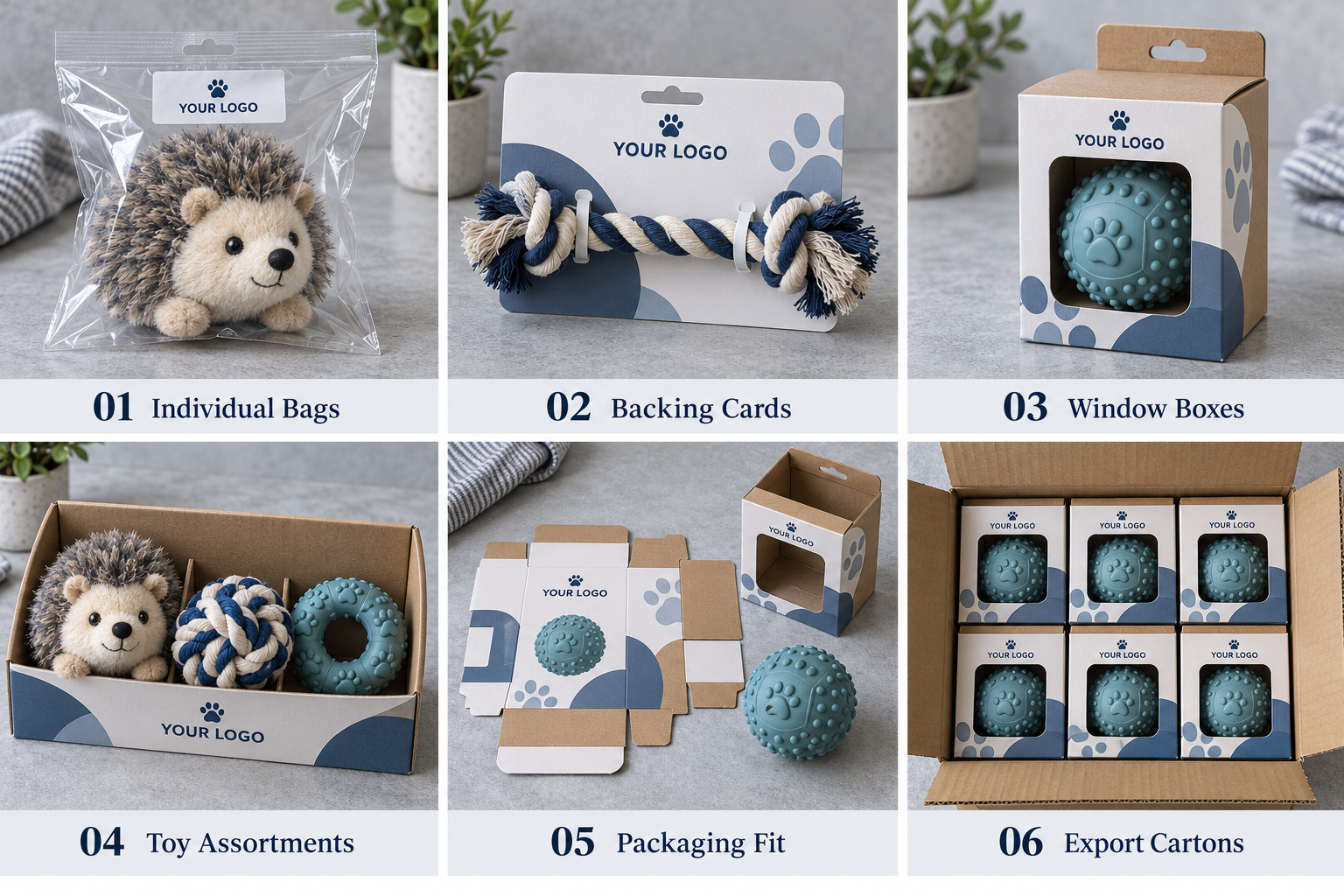
Pawlenzo coordinates pet toy packaging for brands, importers, distributors and wholesale buyers. Options may include bags, header cards, color boxes and export cartons, depending on the selected toy and order requirements.
Start with the approved product dimensions, presentation needs and packing quantity. A hanging plush toy, a rope assortment and a molded toy set require different support and space. We review the proposed format with the responsible production partners before confirming materials, artwork and packing arrangements.
 Review Bags, Header Cards and Boxes
Bag dimensions should allow for the finished toy, projecting parts and any inserted information. Specify whether the bag is individual packaging or part of a larger assortment. Material, closure and required printed content need separate confirmation.
Header cards and backing cards need suitable attachment positions and enough support for the product. Boxes require a defined internal size and opening method. Window areas, inserts and hanging features are reviewed where requested; availability and cost depend on the packaging construction.
Confirm Fit Using the Finished Sample
Packaging should be checked against the approved finished toy, including rope ends, fabric wings, squeakers and other attachments. Flat drawings or approximate product dimensions may miss the space needed after filling or assembly.
Our sample development review can include packaging mockups and assembled pack samples. Buyers should assess product movement, attachment security, closure and presentation. Changes to toy size or construction may require a revised packaging sample before bulk materials are ordered.
Prepare Artwork and Product Identification
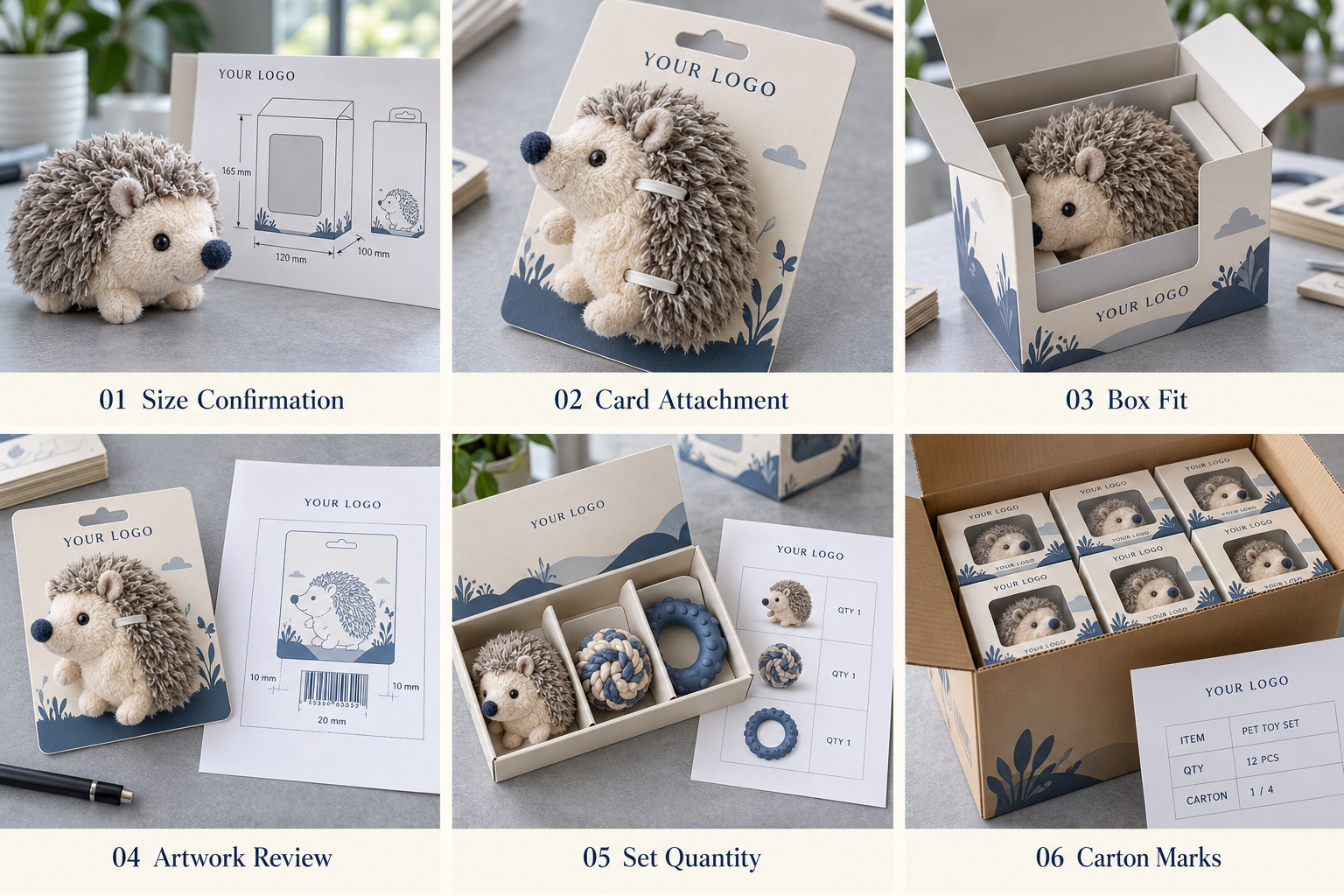
Provide editable artwork, brand colors, barcode files and the required text for each product version. Keep important information clear of folds, cut edges, hanging holes and window openings. Confirm the viewing direction when a toy is displayed vertically or horizontally.
Coordinate packaging content with custom labels and hangtags so product references and language versions remain consistent. Buyers should supply and approve destination-specific information and warnings. Packaging artwork must not introduce unsupported safety, material or certification claims.
 Define Assortments and Export Carton Requirements
For multi-piece packs, identify the exact designs, colors and quantities included. Mixed-SKU cartons need a clear allocation rather than a general instruction to mix products. This helps packing teams distinguish similar items and match each version to its approved packaging.
Export carton planning considers pack dimensions, product protection and agreed handling requirements. During packaging and export preparation, carton quantities, marks and packing documents are reconciled. Final carton dimensions, weight and volume should follow the confirmed packing arrangement.
Review Costs, Minimums and Approval Timing
Packaging costs depend on dimensions, materials, print coverage, construction and quantity per artwork version. Setup or cutting-tool charges may apply. Packaging minimums can differ from product MOQ, especially when several designs or language versions are involved.
Sample costs and timing are confirmed after the format is reviewed. Bulk scheduling depends on artwork approval, packaging availability and product readiness. Any requested transport or packaging tests need an agreed scope. Trade terms and freight arrangements are confirmed in the quotation.
Send Your Packaging Requirements
Send product references, finished dimensions, quantities per SKU and the preferred packaging format. Include artwork, barcode files, assortment details, destination country and requested shipment timing.
Pawlenzo will review suitable packing options, clarify sample requirements and outline the information needed for a packaging quotation.