


Inspection Points Matched to the Production Route
In-process inspection checks selected product characteristics while work is underway, when construction issues can still be addressed before further assembly or packing. Plush, rope and molded pet toys require different checkpoints.
Pawlenzo coordinates inspection requirements with the responsible production partner for wholesale and OEM orders. The scope, timing, checking method and reporting responsibilities are agreed for the selected product. Buyers should identify critical dimensions, attachments, functions and appearance requirements before production begins.
Establishing the Inspection Reference
Checks need a clear comparison basis: the approved sample, current specification sheet, material references, artwork and relevant construction details. Measurement points and acceptable variation should be defined where they affect purchasing decisions.
A photograph alone may not explain seam construction, filling distribution or component retention. These details should be settled through sample development and recorded before bulk work. Sampling frequency, inspection quantities and any special test requirements are confirmed for the order rather than assumed to be identical across all products.
Plush and Rope Construction Checks
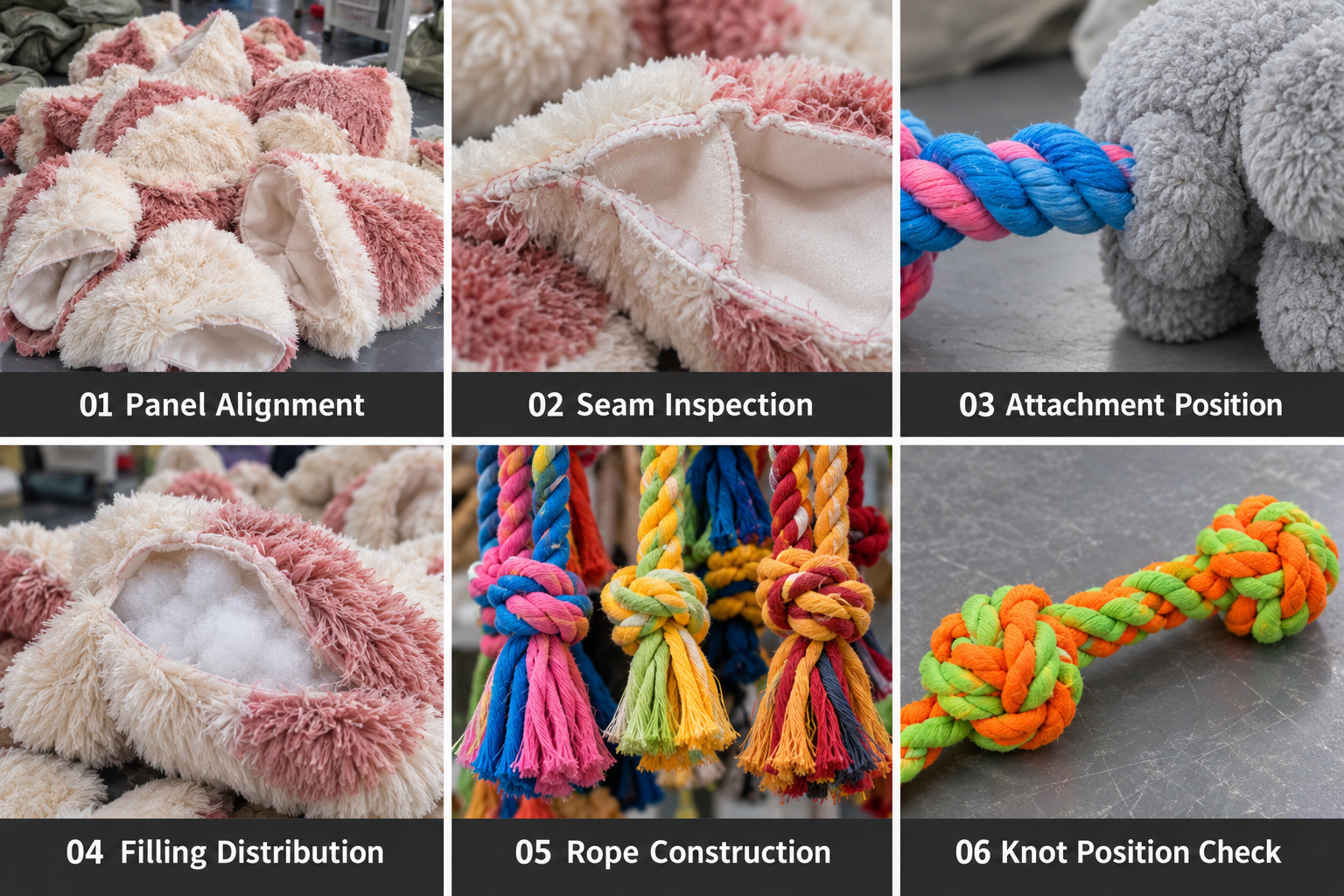
For plush toys, checks may cover panel alignment, seam allowances, skipped stitches, attachment positions and closure preparation. Filling quantity and distribution are compared with the agreed reference before final closure where practical.
Rope toy checks focus on material identity, diameter, cut length, braid arrangement, knot position and connected parts. Finished length needs a consistent measurement method because stretching can change the reading. Issues found during plush sewing and filling or rope assembly should be reviewed before additional work makes correction more difficult.
 Molded Parts, Assembly and Branding
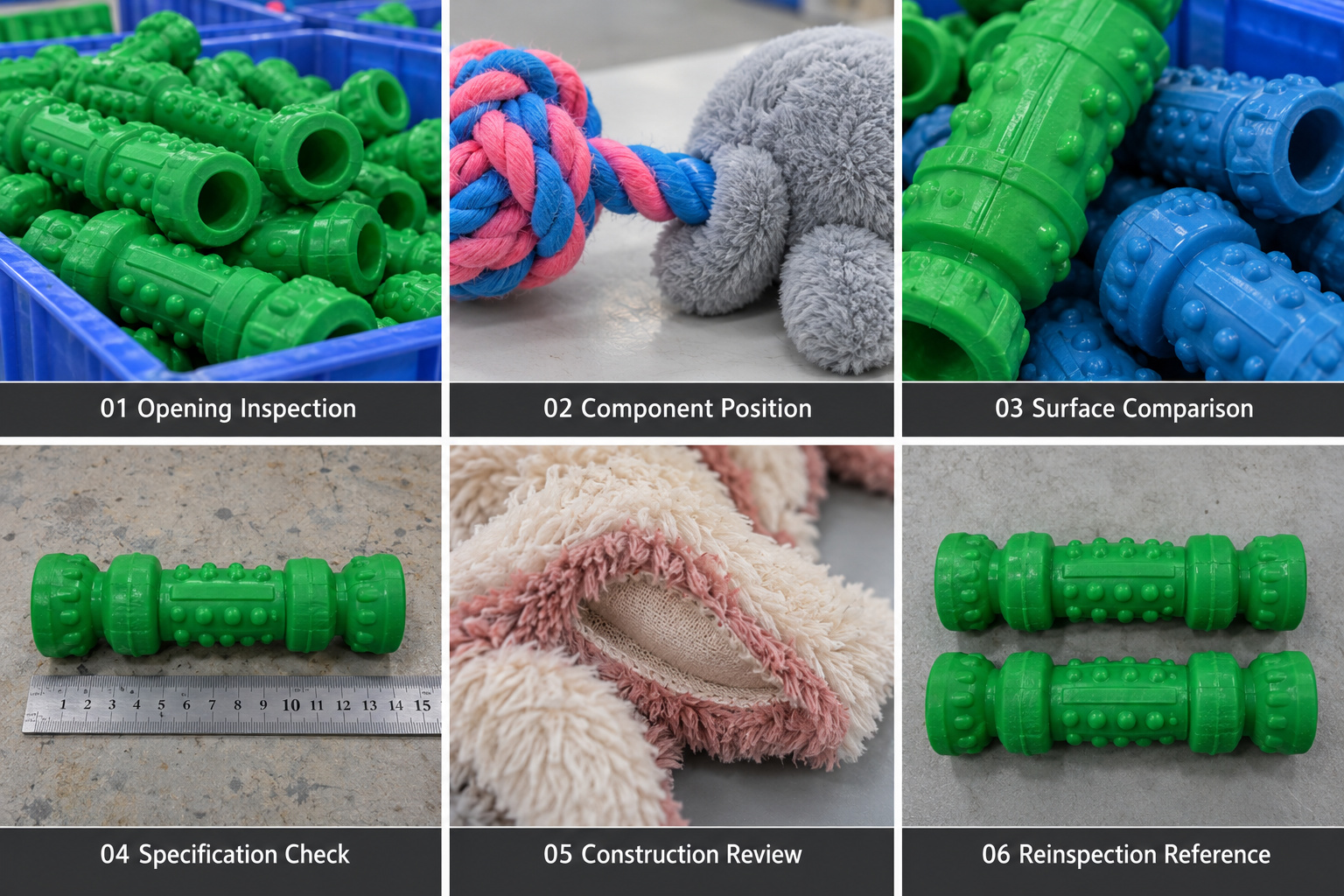
Molded toy checks may include dimensions, weight, deformation, surface defects, openings and trimmed edges. Parts intended to fit together require confirmation before the next assembly stage.
During squeaker and component assembly, relevant checks include component identity, placement, seating and operation. Branding checks compare print, embroidery or label details with approved artwork, including position and orientation. A component substitution or artwork revision must be reviewed against the order requirements before it is accepted.
Recording Deviations and Confirming Action
When a difference is identified, the record should describe the affected product, production stage, requirement and observed condition. Photographs and measurements help distinguish an isolated issue from a recurring production problem.
The responsible partner reviews the cause and proposed action. Depending on the issue, affected goods may need separation, rework or further checking. Changes affecting appearance, materials, construction or function require buyer review where applicable. Reinspection checks the agreed correction; it should not be replaced by an undocumented assurance that the issue has been resolved.
 Testing Boundaries and Final Inspection
Routine production checks do not replace laboratory testing or an agreed pre-shipment inspection. Pull tests, needle detection and chemical testing are specified only where required, feasible and confirmed. Results must relate to the actual product and test scope.
Before packing and shipment, final quality inspection reviews the finished goods and applicable order requirements. In-process findings provide useful follow-up points for that inspection.
Define Your Order’s Inspection Requirements
Send selected SKUs, specifications, quantities, approved references and destination-market requirements. Identify critical checkpoints, requested tests, reporting needs and any third-party inspection plans.
Inspection scope can affect sample requirements, cost and scheduling. Pawlenzo will clarify responsibilities and unresolved acceptance criteria with the production partner before confirming the bulk order plan.