


Matching Rope Construction to the Approved Design
Rope diameter, braid structure, cut length and knot placement determine the proportions and handling of a finished rope pet toy. Tug ropes, knotted balls and rope-and-plush combinations require different preparation and assembly details.
Pawlenzo coordinates suitable production partners for wholesale and OEM pet toy orders. Depending on the design, production may begin with prepared rope or include braiding before cutting and knotting. We confirm the applicable route, material requirements and reference sample before agreeing on bulk production terms.
Confirming Fibers, Diameter and Color Arrangement
Buyers should specify the preferred fiber composition, rope diameter, color combination and finished construction. Cotton, polyester and blended options need to be identified accurately; appearance alone cannot confirm composition.
Braid tightness and strand arrangement affect flexibility, texture and the finished diameter. Multicolor designs also require an approved color sequence or reference. Our material options review helps clarify these requirements before sampling. A material substitution may change weight, knot size and handling, so it needs review before use.
 Braiding and Cutting to Length
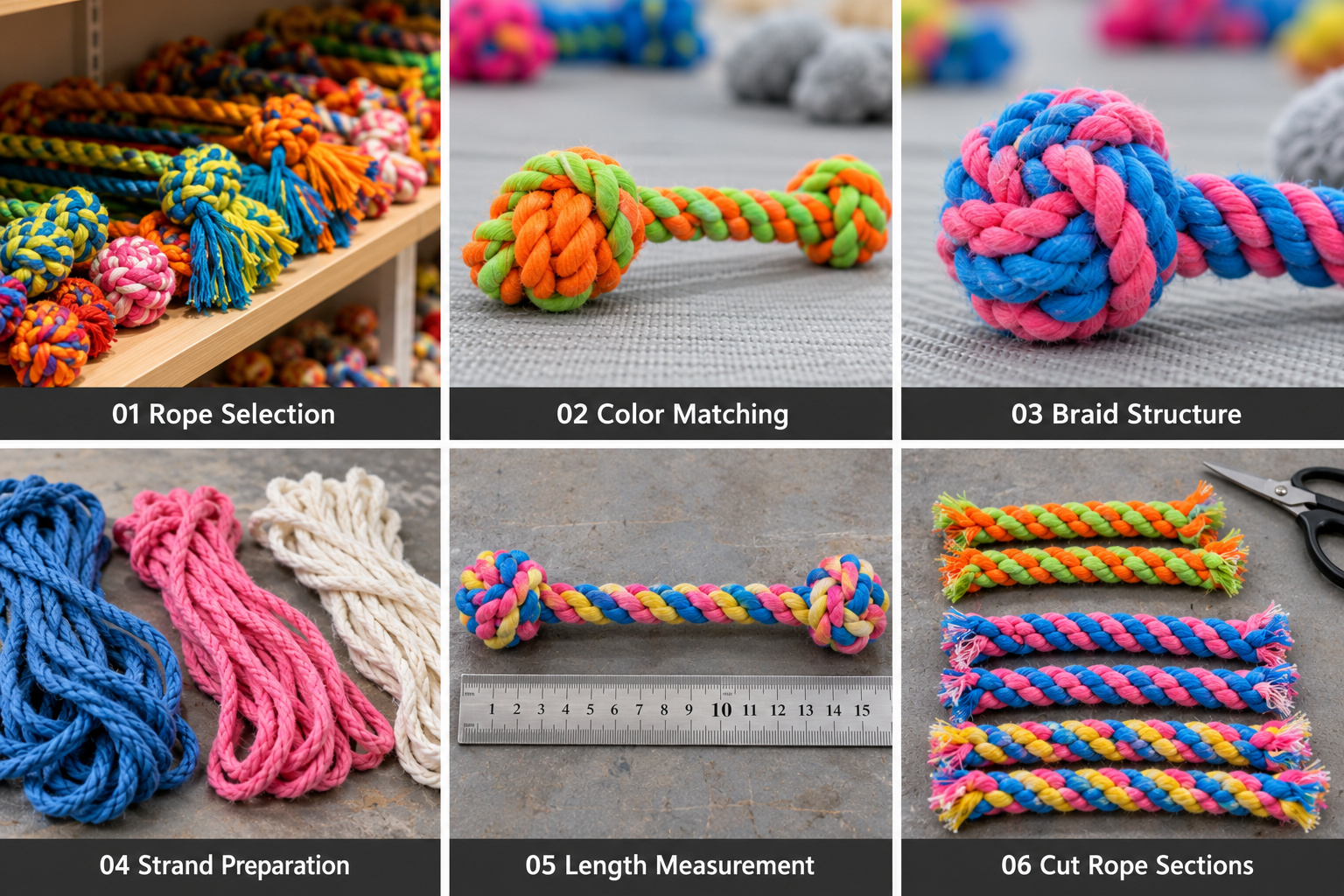
Where braiding is required, the strand arrangement and braid structure are established against the sample. When prepared rope is used, its specification must be confirmed before cutting begins.
The cut length must allow for knots, loops, attachments and end finishing. It should not be confused with the finished toy length. Different rope thicknesses and knot patterns consume different amounts of material. For custom sizes and shapes, a trial construction helps establish the required starting length and agreed finished measurement points.
Knotting, Loops and Component Connections
Knot type, spacing and tightening influence the finished shape. Uneven knots can produce inconsistent lengths or leave attachment sections positioned differently from the reference.
Rope toys combined with molded parts or plush sections require a defined connection method. Openings, rope diameter and assembly sequence must be compatible. End treatment also depends on fiber composition and design; heat sealing is not suitable for every material. Through sample development, the buyer can review knot layout, exposed ends, component fit and overall proportions before approval.
 Inspection and Packing Preparation
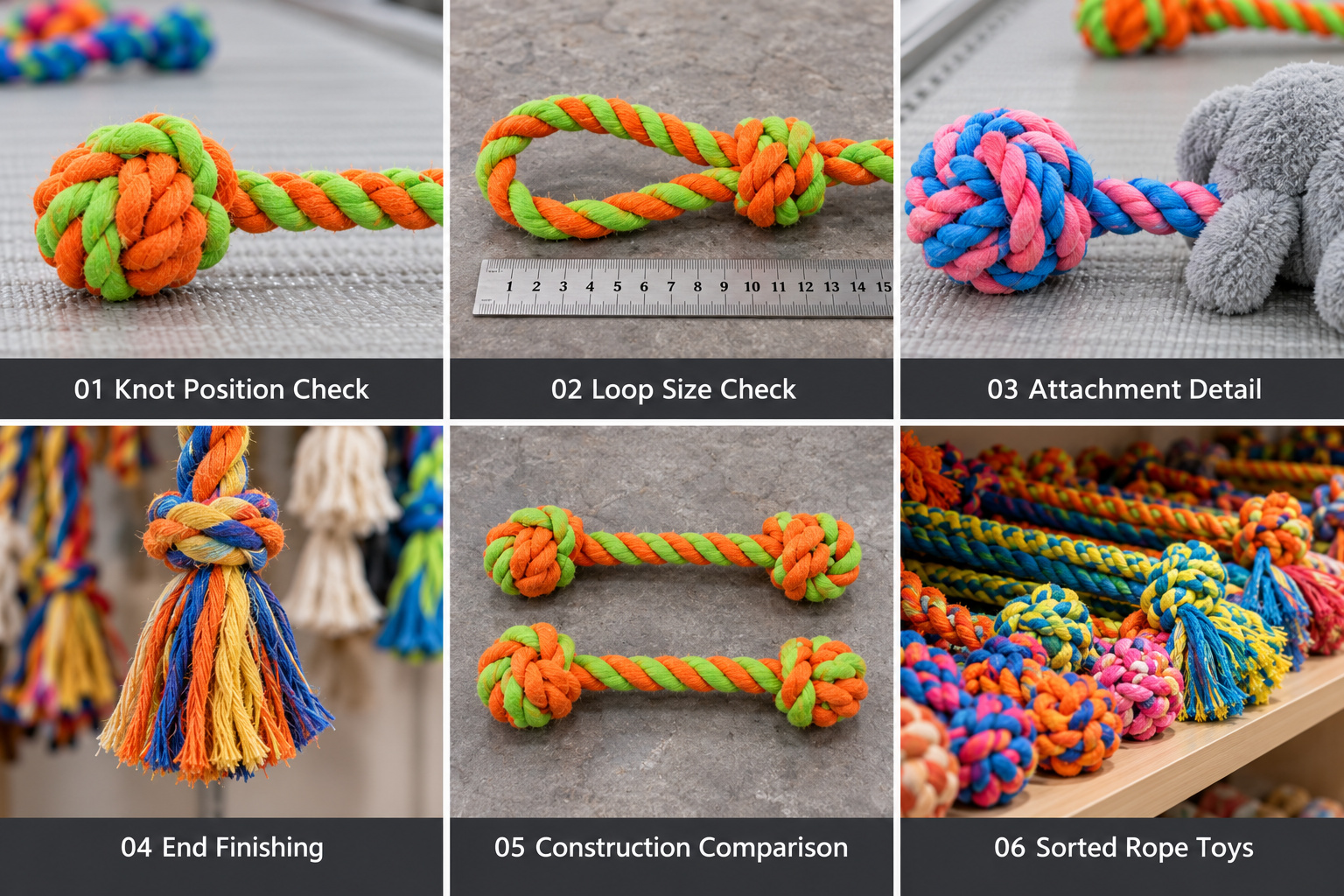
Agreed checks may include rope diameter, finished length, weight, color arrangement, knot position, loose strands and attachment construction. Measurements should use a defined method because flexible rope can give different readings when stretched or relaxed.
Any pull or durability testing requires confirmed conditions and acceptance criteria. Our in-process inspection approach links checks to the approved specification. Before packing, knot shapes, exposed ends, labels and quantities are reviewed. Packing arrangements should avoid unnecessary distortion and keep mixed designs identifiable.
What We Need for a Quote
Send a reference image or sample, fiber preference, rope diameter, finished dimensions, knot layout and quantities per design and color. Include connected components, branding, packaging, destination and shipping terms.
MOQ, sample cost and timing depend on rope availability, color requirements, braiding arrangements and assembly work. Additional knots, tighter construction or revised connections can affect material consumption and labor. Pawlenzo will review these details with the production partner and clarify the approvals needed before confirming a bulk production schedule.