

 Production Routes Matched to Your Pet Toy Order
Pawlenzo supports pet toy manufacturing projects for brands, importers, distributors and wholesale buyers. Our product scope includes plush, rope, rubber and TPR toys, with different production routes selected according to construction, materials and order requirements.
We coordinate specifications, samples, production follow-up, inspection responsibilities and export packing with suitable production partners. Processes described here apply to the relevant product type; an individual order does not pass through every manufacturing stage.
Before production planning, we review the approved design, quantities per SKU, branding, packaging and destination requirements. These details establish what needs to be made and which points require confirmation.
Establish the Sample and Production Specifications
Production needs a reference that covers more than appearance. Dimensions, measurement points, materials, colors, components and packaging should be recorded alongside the approved sample.
A plush toy specification may include fabric pile, filling distribution and squeaker placement. Rope toys require diameter, finished length and knot configuration. Molded toys need material identification, geometry and agreed construction details.
Our sample development process helps resolve these points before production. Any difference between the sample and the intended order must be documented and approved.
Prepare Materials and Components
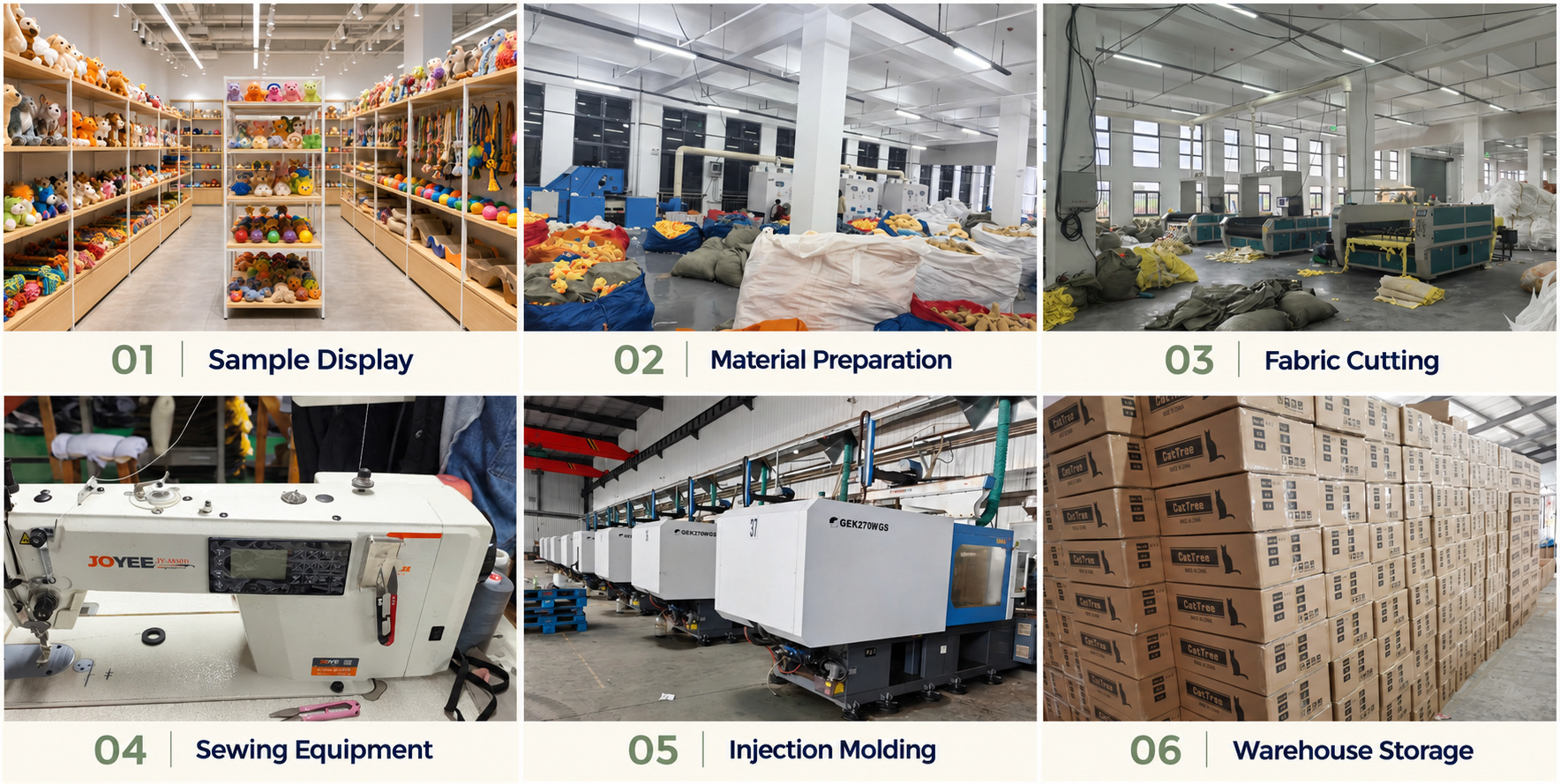
Material preparation starts with the agreed fabric, rope, filling, molding material and purchased components. Relevant checks include identification, color, visible condition and consistency with approved references.
For plush fabrics, pile direction and backing can influence cutting and the finished appearance. Rope diameter and fiber composition affect the resulting knot size and feel. Molded products require the specified material and color formulation.
Labels, squeakers, hangtags and packaging also need to be available in the correct versions. An unconfirmed component substitution can affect assembly, appearance or scheduling, so proposed changes require review before use.
 Cut, Sew and Fill Plush Toys
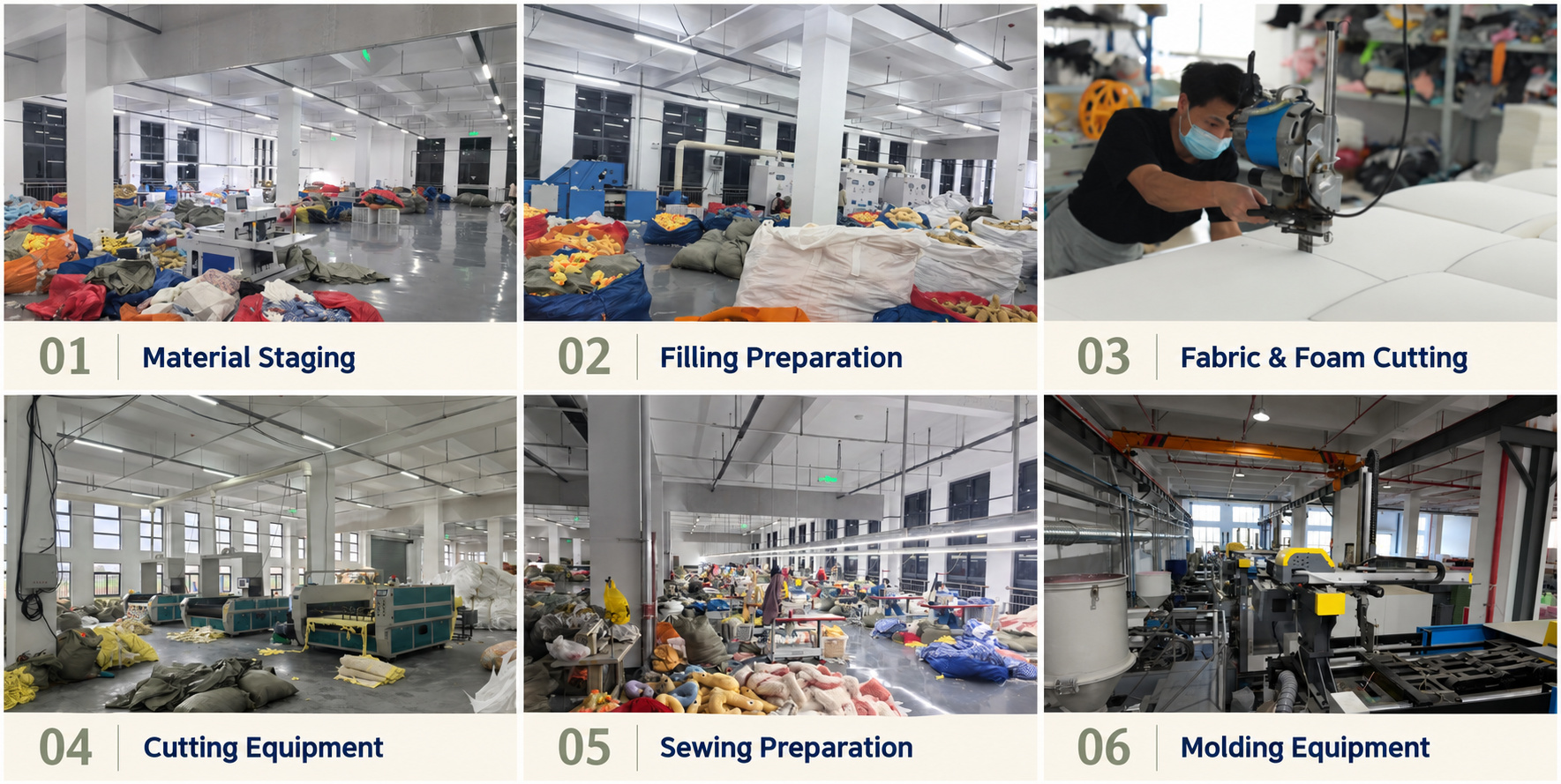
Plush production begins with patterns and fabric cutting. Cutting direction, seam allowance and the alignment of patterned areas influence how consistently the finished toys match the approved shape.
Sewing brings together the body panels and attachments. Internal components are positioned according to the agreed construction before filling and closure. Filling distribution affects firmness, symmetry and access to a squeaker.
Checks during these stages should address missed stitches, open seams, attachment placement and uneven filling. Difficult areas are easier to correct before the toy is fully closed.
Form Rope Toys and Mold Rubber or TPR Designs
Rope toys are cut and formed into the specified braid or knot arrangement. Finished length, knot position, end treatment and connections need comparison with the approved reference.
Rubber and TPR designs follow a molding route appropriate to the selected material and tooling. Material preparation, molding, cooling and trimming influence dimensions, surface appearance and part consistency.
New shapes may require tooling assessment before costs and timing can be confirmed. These production routes are explained further in our pet toy manufacturing process.
 Complete Branding, Assembly and Finishing
Branding may be applied before or during assembly, depending on the method and access needed. A sewn label requires a confirmed seam position; embroidery or printing needs an appropriate application area.
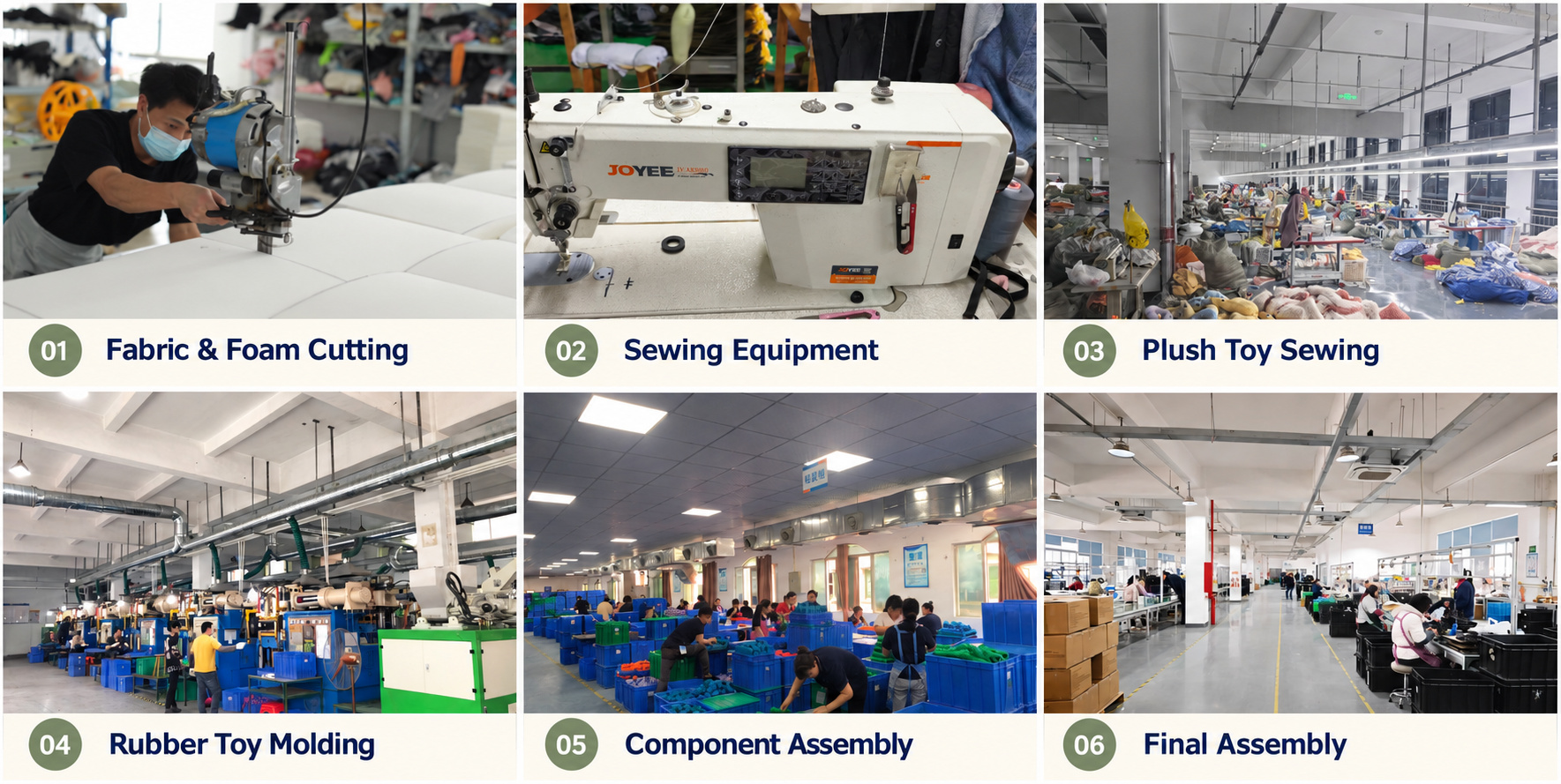
Final assembly can include joining rope and fabric sections, securing accessories and completing closure seams. Finishing addresses loose threads, trimming residue and visible workmanship issues.
The finished product should retain the approved proportions and component arrangement. Changes to attachment construction or branding placement require confirmation rather than an assumption that they are equivalent.
Check Products Against Agreed Requirements
Inspection checkpoints should reflect the product and the buyer’s requirements. Relevant checks can include dimensions, appearance, seams, attachments, component function, branding and packaging accuracy.
Inspection scope, sampling arrangements and acceptance criteria need agreement before production. Specific durability testing or third-party inspection requires a defined method, responsibility and schedule.
An approved sample supports comparison, while recorded specifications clarify details that visual checks alone cannot establish. Issues identified before shipment need review and appropriate correction before release.
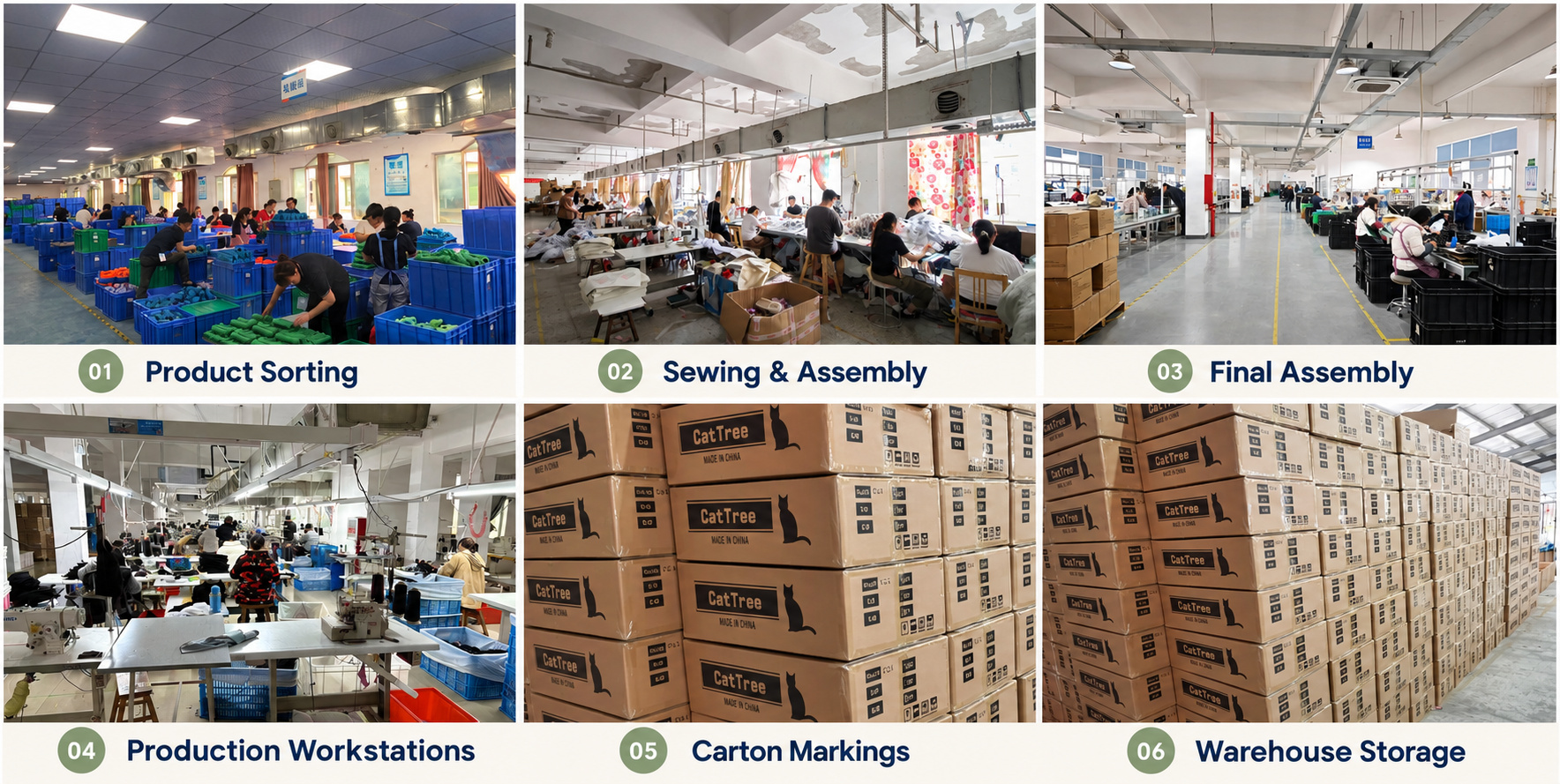
Pack by SKU and Prepare for Export
Packing follows the confirmed individual pack, assortment ratio and carton configuration. Check product identification, barcode artwork, pack quantity, carton marks and protection against deformation during handling.
Our packaging and export preparation support connects finished goods with packing lists and shipment arrangements. Carton dimensions and weights are confirmed from the completed packing configuration.
Send your product references, quantities, target market and required delivery date. We can then review the relevant production stages, approval needs and packing requirements for your order.