


Turning Cut Panels into Approved Toy Shapes
Sewing and filling determine the shape, firmness and construction of a plush pet toy. Panel alignment, seam allowances, attachment positions and filling distribution must work together to reproduce the approved sample.
Pawlenzo coordinates plush pet toy production with suitable manufacturing partners for importers, wholesalers and private label brands. Before bulk sewing, we review the selected fabric, pattern version, finished dimensions and internal components. Filled, lightly stuffed and stuffing-free designs require different construction decisions, which should be settled during sampling.
Panel Alignment and Seam Construction
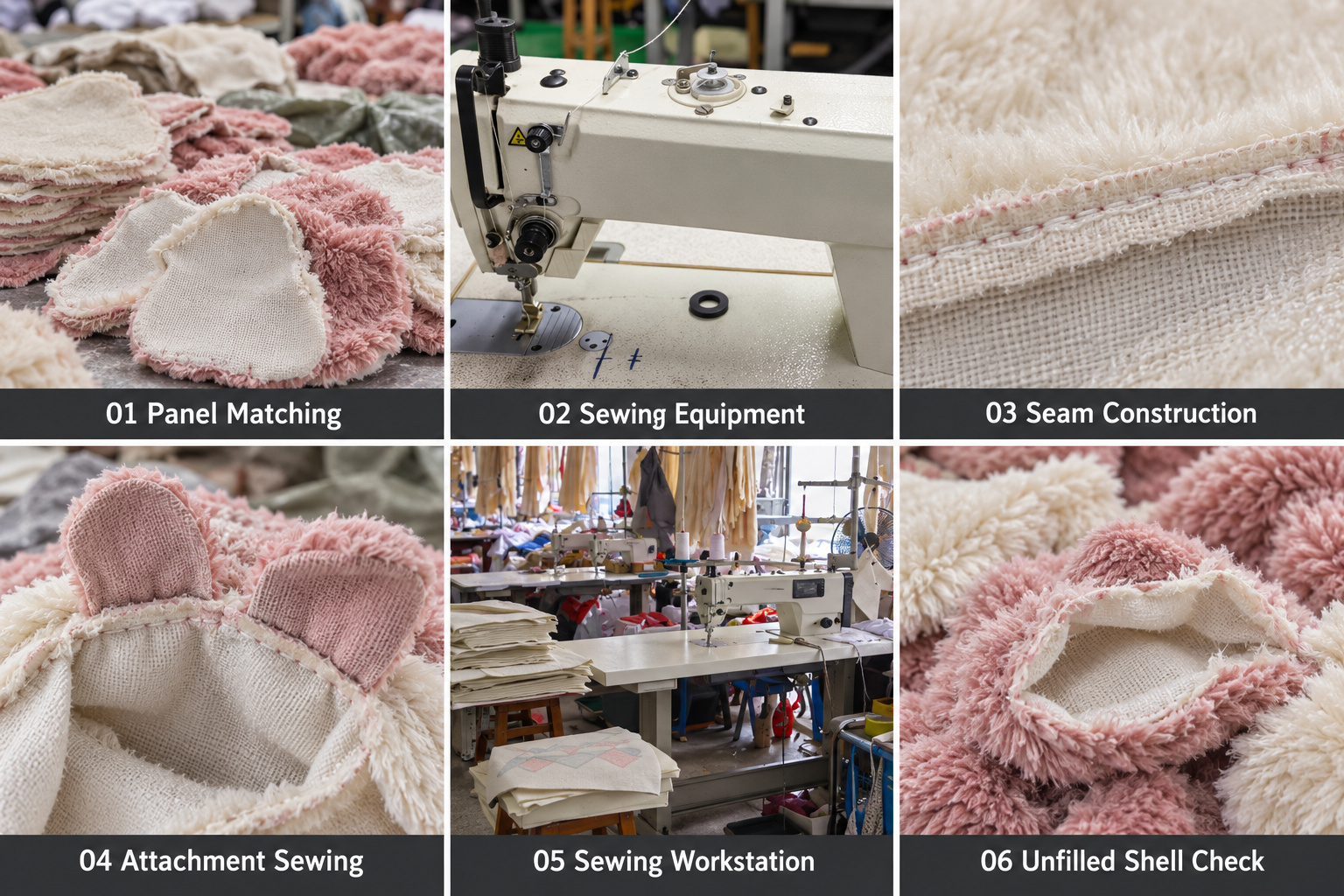
Cut panels are matched by design, size, color and orientation before sewing. Pile direction and printed details need consistent placement, while curved sections require sufficient allowance for assembly and turning.
The production partner reviews stitch type, thread and seam construction against the fabric and toy design. Ears, limbs, rope sections and sewn labels need defined insertion positions. Our fabric cutting and pattern preparation process provides the panel reference; sewing checks then identify skipped stitches, open seams, uneven alignment and misplaced attachments.
 Filling Material, Quantity and Distribution
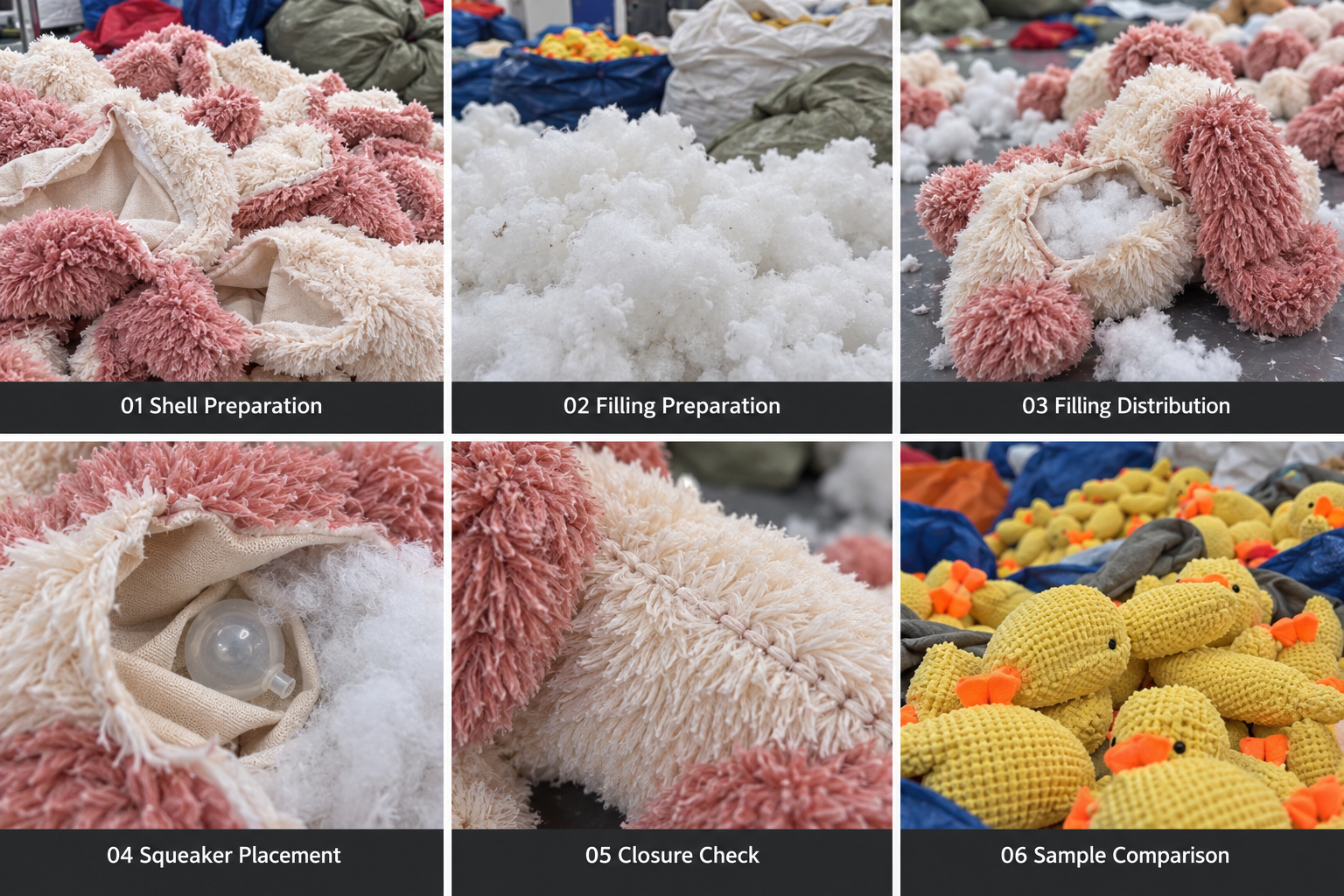
Filling affects product weight, firmness and proportions. Too much filling can distort narrow sections or place additional pressure on seams; too little can leave an uneven shape or allow internal parts to shift.
The filling material and target amount should be agreed alongside the finished sample. Distribution through the body, head and limbs matters as much as total weight. A material or firmness change may require another sample because the original pattern can produce a different result. Buyers can review suitable choices through our material and fabric options page.
Squeaker Placement and Final Closure
Squeakers and other internal components require an agreed position, orientation and retention method. Their placement must allow the intended function without creating an unsuitable fit or interfering with closure.
After filling and component placement, the remaining opening is closed using the construction approved for that design. Closure seams, nearby attachments and overall shape are checked before the item moves forward. Changes to squeaker size, filling quantity or body dimensions should be assessed together through squeaker and functional customization.
 In-Process Checks and Bulk Consistency
Checks may cover finished dimensions, weight, filling distribution, seam appearance, attachment placement and squeaker operation. The approved reference and specification sheet establish the comparison points. Any seam or attachment strength testing requires an agreed method and acceptance criteria.
During in-process quality inspection, identified differences are reviewed before further production where practical. Needle detection is specified only when required and confirmed. Before packing, toys should be checked for loose threads, exposed filling and shape changes caused by handling. Compression packing requires separate review of appearance and function after unpacking.
Quotation, Samples and Production Timing
Send the toy reference, finished dimensions, fabric preference, filling requirements, internal components and quantities per design and color. Include label positions, packaging, destination, shipping term and requested delivery window.
Panel count, attachment work, closure complexity and filling requirements affect labor and cost. MOQ and timing also depend on material availability and sample revisions. Pawlenzo will clarify outstanding construction details with the production partner and confirm the sample approval requirements before agreeing on bulk production terms.