


Prepare Materials Against the Approved Design
Pawlenzo coordinates material preparation for plush, rope and molded pet toy orders with suitable production partners. For brands, importers and wholesale buyers, this stage connects the approved development sample with the materials used in production.
The starting point is a material specification for each SKU. It identifies the outer fabric, filling, rope, molded material and any functional components. Color references, construction details and agreed substitutions should be settled before materials are released for processing.
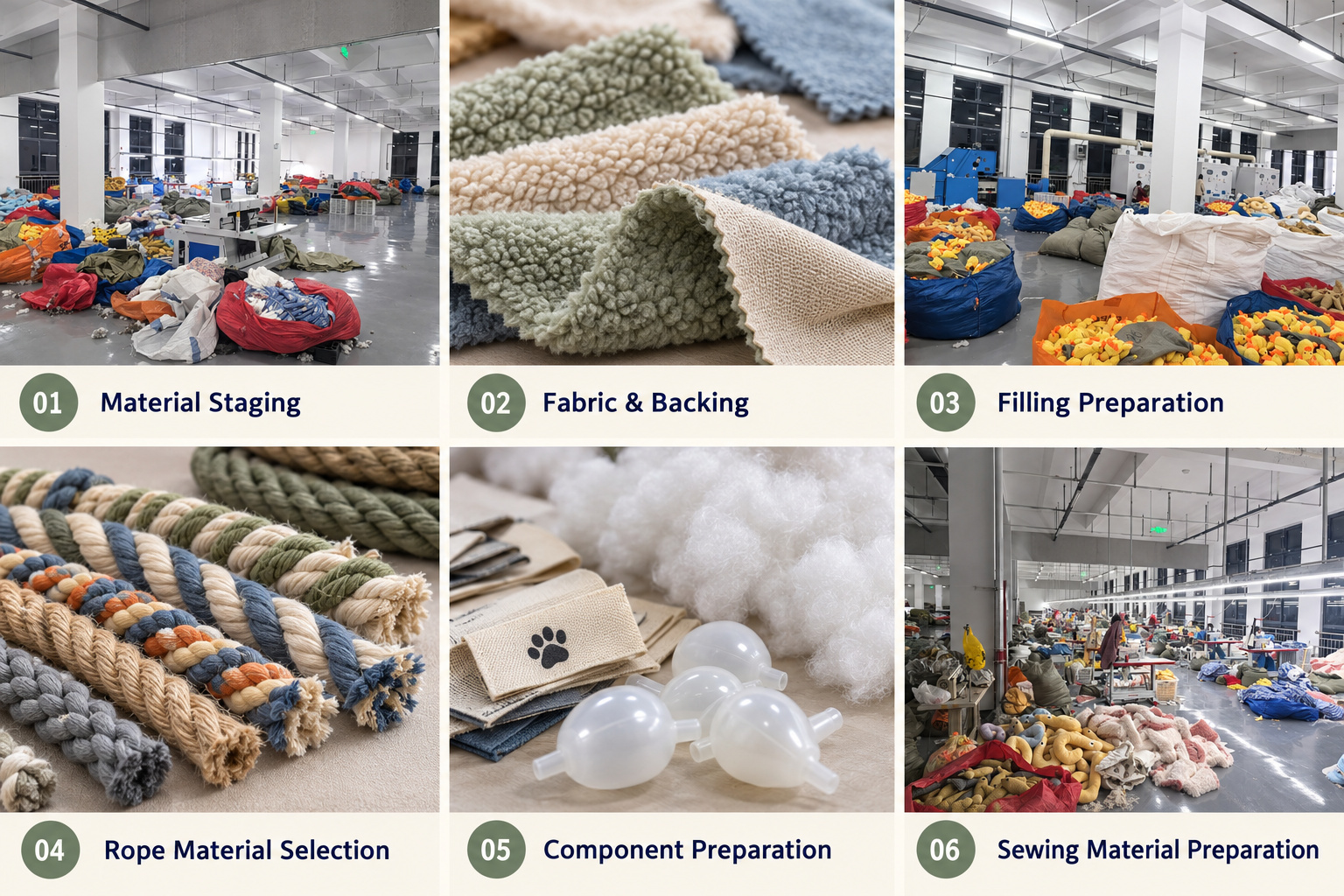 Confirm Fabric Texture, Backing and Direction
Plush fabric selection involves more than matching a color. Pile length, fabric weight, stretch and backing affect the finished shape, seam appearance and how small details can be sewn. A fabric that works on a rounded body may be unsuitable for narrow ears or small curved panels.
Before cutting, fabric is reviewed for visible defects, shade variation and pile direction. Printed materials also require attention to pattern orientation and repeat placement. These details help avoid mismatched panels within the same toy.
Our material and fabric options page explains which characteristics buyers should confirm during development.
Prepare Filling and Internal Components
Filling type and the agreed amount influence firmness, recovery and the space available for a squeaker. Preparation should follow the approved construction rather than relying only on the toy’s external dimensions.
Internal components need to match the specified size and placement. A larger squeaker may crowd a narrow body, while excessive filling can make it harder to activate. Filling and components should be kept clean, protected and separated by specification before assembly.
Changes to filling or component configuration require review before they are introduced into production.
Match Rope Materials to the Finished Structure
Rope preparation considers fiber composition, diameter, strand construction and color combination. These affect the appearance of braided sections, the size of knots and the finished length after forming.
Cut lengths must allow for the material taken up by knots and connections. A rope attached to a plush body or molded part also needs to fit the agreed attachment structure.
Buyers should confirm the finished dimensions and feel through a sample. Matching the nominal rope diameter alone does not guarantee the same construction or handling characteristics.
Confirm Rubber and TPR Material Requirements
Rubber and TPR specifications should identify the agreed material grade, color and hardness where relevant. The choice must suit the product geometry and production method. Material names alone do not establish durability or suitability for every application.
Before rubber and TPR molding, the production partner reviews material compatibility with the tooling and processing requirements. Any proposed material change should be discussed because it may affect flexibility, surface finish, shrinkage or cost.
Required material documentation or testing should be identified when requesting a quotation.
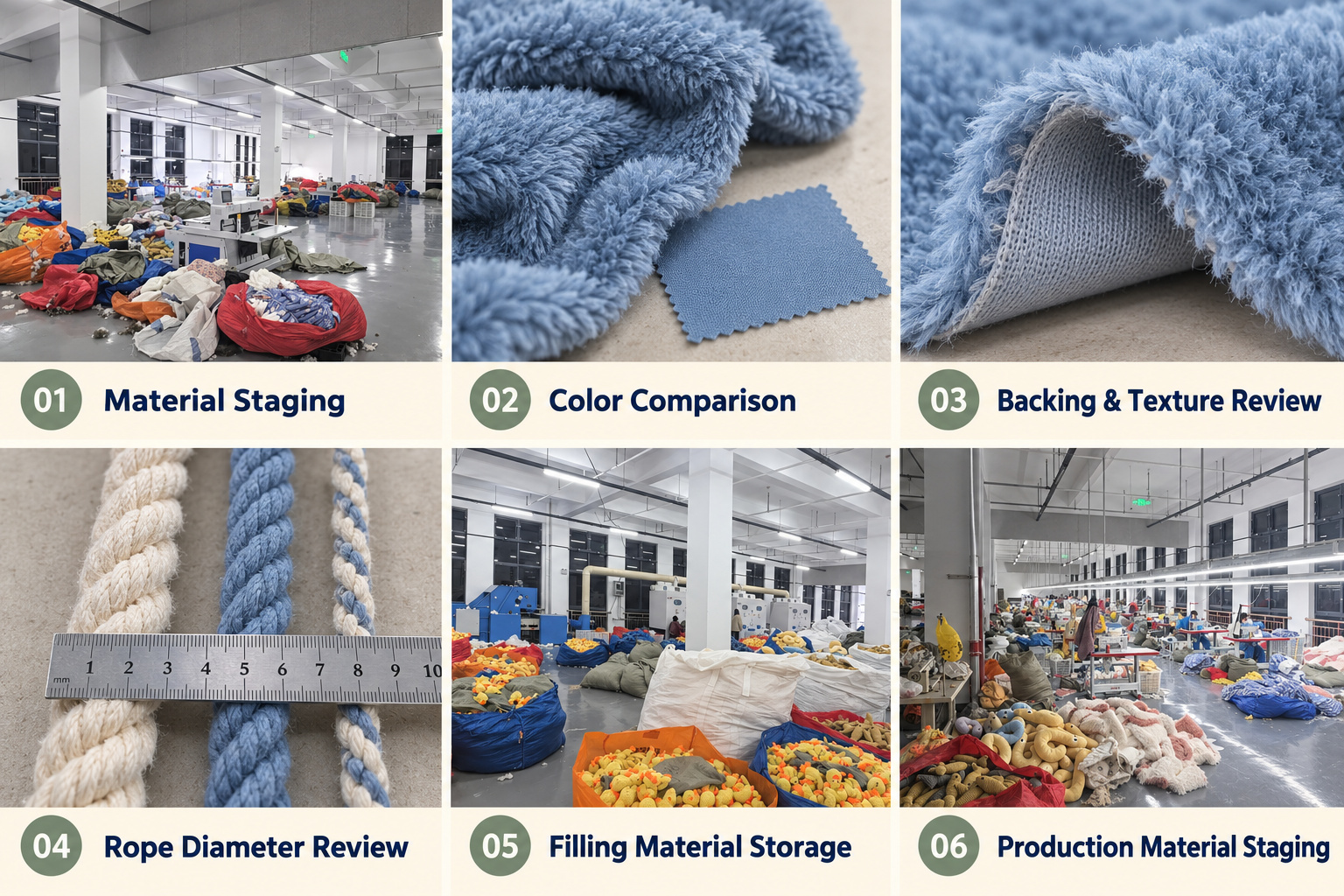 Review Incoming Materials and Separate Order Batches
Incoming checks should follow the agreed specification and inspection scope. Relevant points include material identity, color, visible condition, dimensions and quantity. Visual examination cannot confirm chemical composition or replace a specified laboratory test.
Materials with unresolved differences should be separated pending review. Keeping batches and SKU requirements identifiable helps reduce mix-ups when similar fabrics, rope colors or components are prepared together. These references also support subsequent in-process inspection.
Provide Material Details for an Accurate Quotation
Send the product reference, quantity by SKU, preferred materials, color references and target market. Include any required composition, hardness, fabric weight or supporting documentation.
MOQ and preparation time depend on material availability, dyeing requirements, component sourcing and order quantities. Confirming these details early allows us to identify sample requirements and material lead times before agreeing on the production schedule.