


Match the Production Route to the Toy
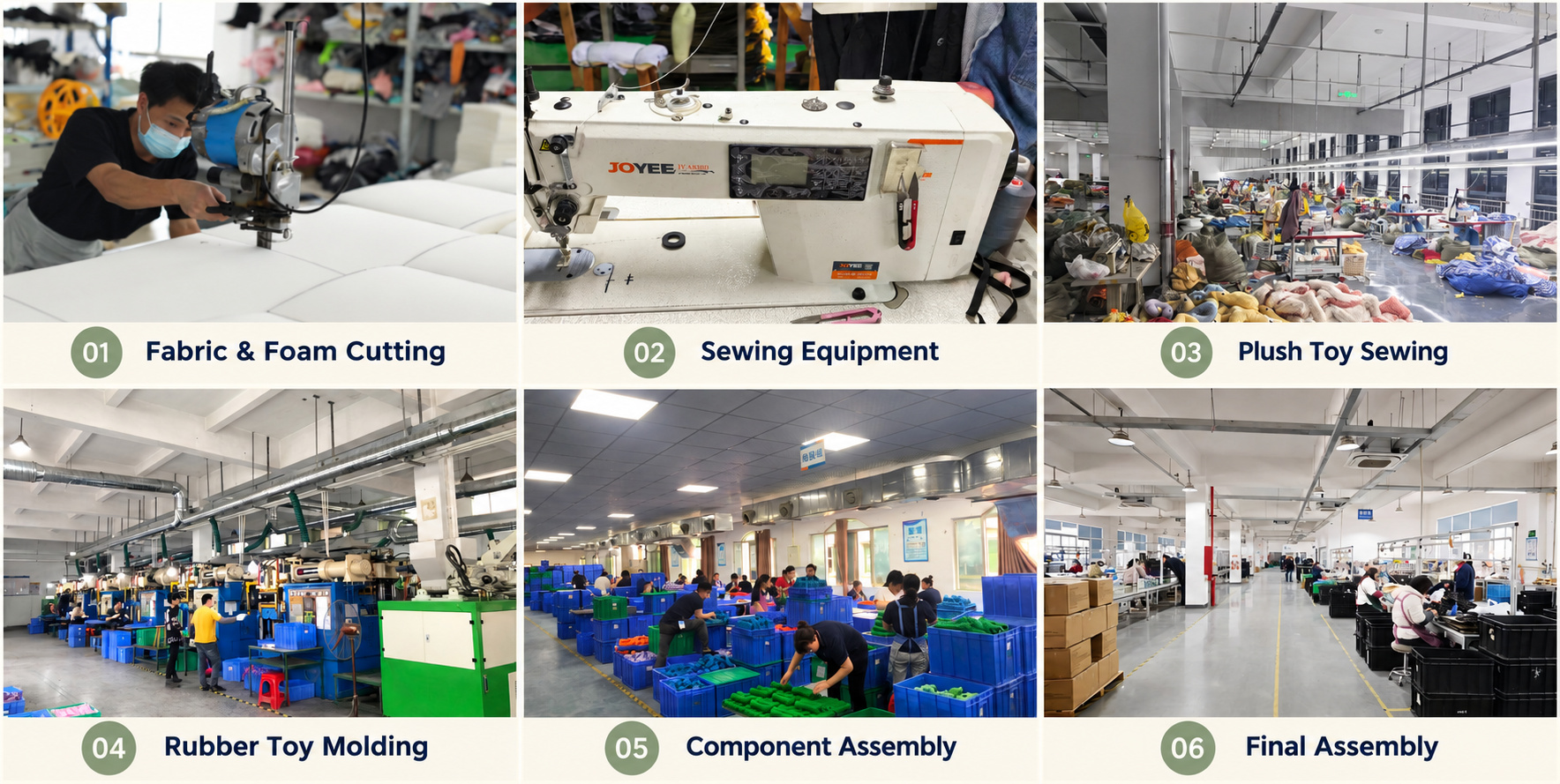
Pawlenzo helps pet brands, importers and wholesale buyers coordinate pet toy production with suitable manufacturing partners. Plush, rope and molded toys require different processing methods. A combined design may involve sewing, molding and component assembly within the same order.
Before production, we clarify the product construction, approved materials, branding, packaging and inspection responsibilities. This gives buyers a defined reference for discussing cost, delivery and acceptable production variation.
 Confirm the Sample and Production Specifications
The approved sample should be supported by written specifications covering dimensions, measurement points, materials, colors, components and label positions. For plush toys, filling distribution and squeaker placement also need confirmation.
A reference photograph alone may not show seam construction, material thickness or internal attachments. These details are resolved during sample development before the order moves forward. Revisions should carry a version date so production follows the correct sample and documents.
Prepare Materials and Cut Components
Fabric preparation considers color, pile direction, backing and any printed pattern. Cutting layouts must account for seam allowances and the position of visible features. Incorrect orientation can make matching panels look different after assembly.
Rope materials are prepared according to the agreed diameter, color combination and finished length. Molded designs require confirmation of the material grade, color reference and tooling requirements. Substitutions should be reviewed before use because they may change appearance, feel or performance.
Sew, Fill and Close Plush Toys
Cut panels are sewn in the required sequence, with labels and fabric attachments introduced at the appropriate seams. Small curves, narrow limbs and multiple fabric layers need particular attention to maintain the approved shape.
Filling is distributed to support the intended profile without crowding functional components. Squeakers must remain in the agreed position and work through the surrounding fabric and filling. Closing seams and attachment points are then checked against the sample.
Form Rope Toys and Mold Components
Rope toys are cut, braided or knotted to achieve the specified structure. Knot position, loop size and exposed ends affect finished dimensions. Designs combining rope with plush or molded parts also require a defined connection method.
For rubber and TPR products, the production route depends on the material and design. Tooling, wall thickness, openings and surface details influence molding and finishing. Buyers can review rubber and TPR toy molding when discussing new shapes or changes to existing designs.
Assemble and Review Production Pieces
Assembly brings together the components specified for each SKU. Checks focus on visible workmanship, dimensions, attachment placement and relevant functions. Examples include uneven filling, open seams, loose connections, surface defects and incorrectly positioned labels.
Inspection methods and acceptance criteria should be agreed before production. Any required durability or laboratory testing needs a separate scope; a visual check does not establish chew resistance or market compliance. Identified deviations should be reviewed before affected goods proceed to packing.
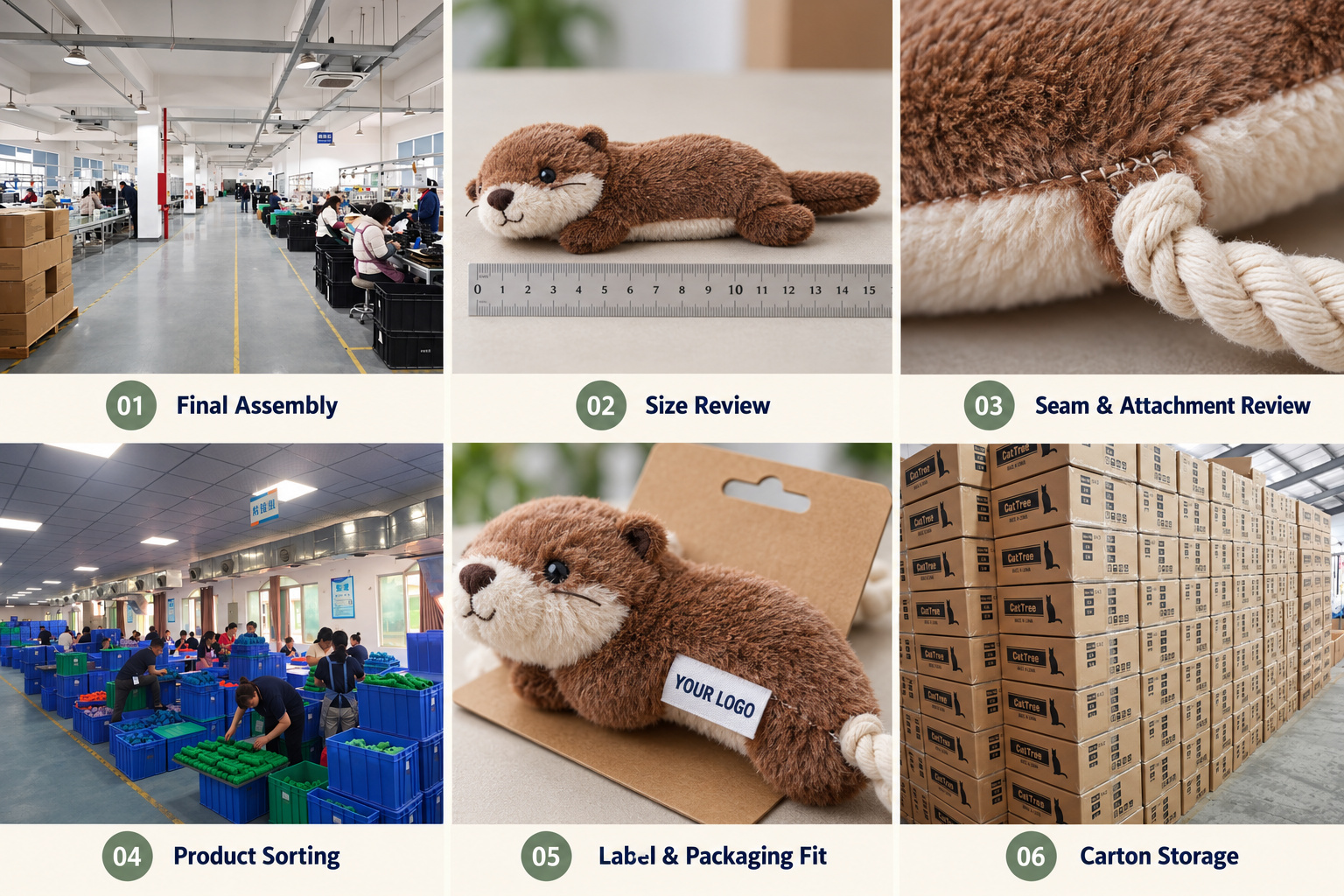 Pack by SKU and Confirm Shipment Readiness
Packing instructions define the unit pack, assortment, barcode artwork, carton quantity and shipping marks. Mixed orders need clear SKU separation to reduce packing errors.
Our packaging and export preparation coordination covers the agreed packing requirements and shipment information. Production timing is confirmed around material availability, tooling, sample approval and packaging readiness.
Send your product reference, quantity by SKU, target market, customization requirements and required delivery date. We can then review the production route, outstanding approvals and quotation details.