


From Approved Design to Cutting Patterns
Fabric cutting determines how consistently a plush pet toy can be sewn, filled and assembled. A cutting pattern must translate the approved design into panels that account for fabric behavior, seam allowances, filling and component positions.
Pawlenzo coordinates these requirements with the relevant production partner for wholesale and OEM pet toy orders. We review the reference sample, dimensions and construction before bulk cutting. A product photograph can start the discussion, but it rarely provides enough detail to approve production patterns without sampling.
Confirming Dimensions and Construction Details
Before pattern preparation, buyers should identify the required finished dimensions and how they should be measured. Flat measurements and filled-product measurements can differ, especially for rounded bodies, narrow limbs and irregular shapes.
The review also covers panel layout, attachment positions, filling access and closure locations. Embroidery or printing areas must be considered before cutting where they affect panel size or alignment. For requested changes, our custom sizes and shapes review helps clarify which dimensions affect the pattern and which require a revised sample.
 Fabric Direction and Cutting Layout
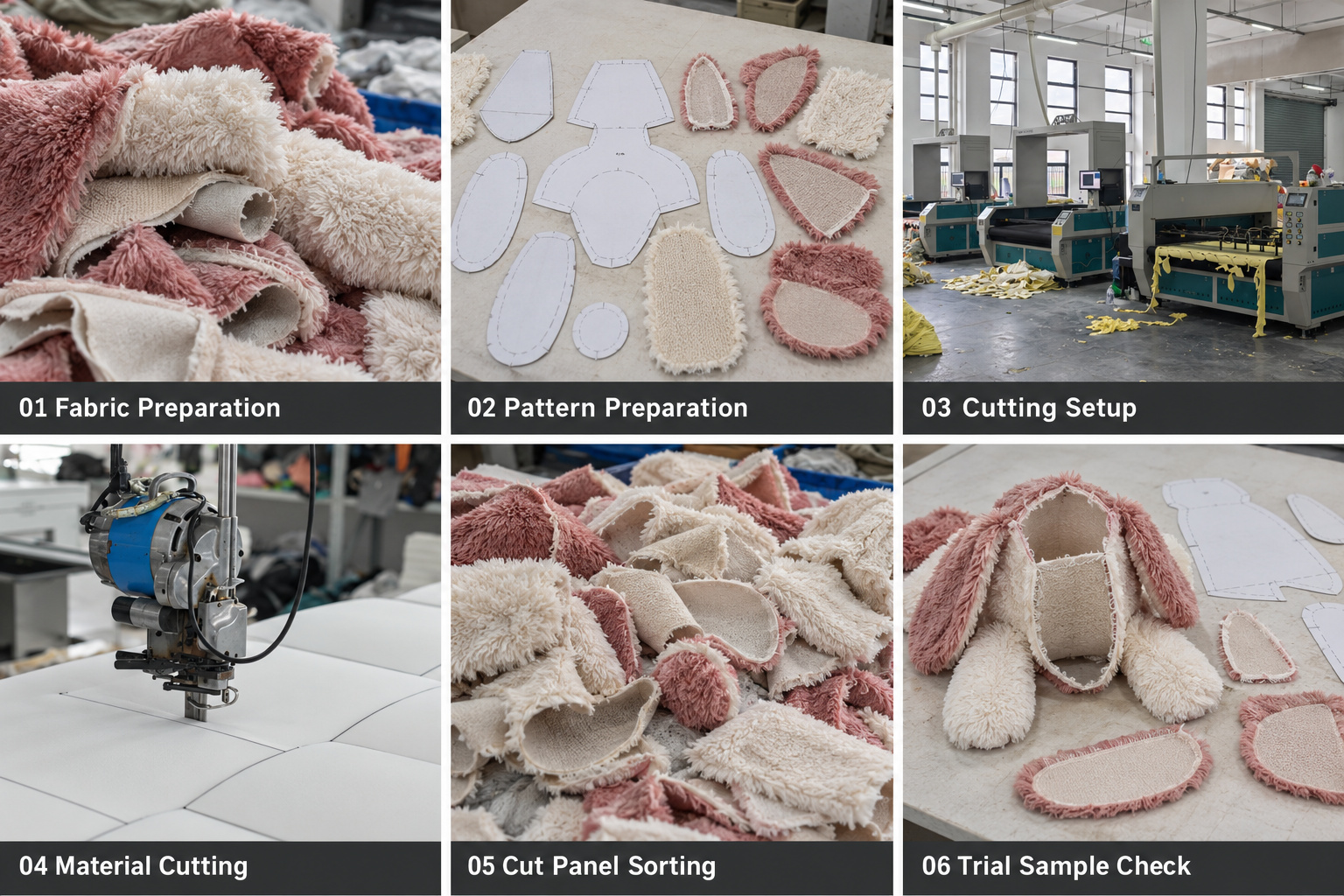
Pile direction, stretch and printed patterns influence the finished appearance. Panels cut in different directions may look different in shade or texture even when they come from the same fabric.
The cutting layout should account for these characteristics alongside material usage. Directional prints and longer pile can restrict panel placement and increase fabric consumption. Stretch fabrics may require adjustments to maintain the intended shape after filling. Our material and fabric options review should therefore be completed before the cutting pattern is finalized.
Trial Cutting and Sample Assembly
Trial cutting allows the production partner to check whether the panels can be assembled into the required shape. The sewn and filled sample reveals issues that a flat pattern cannot show, including uneven proportions, tight curves, misplaced attachments or insufficient space around a branding area.
When a revision is needed, the affected pattern pieces and sample requirements should be identified clearly. Through sample development, the buyer confirms the resulting shape, dimensions and appearance before the pattern is released for bulk work.
 Bulk Cutting Checks and Panel Identification
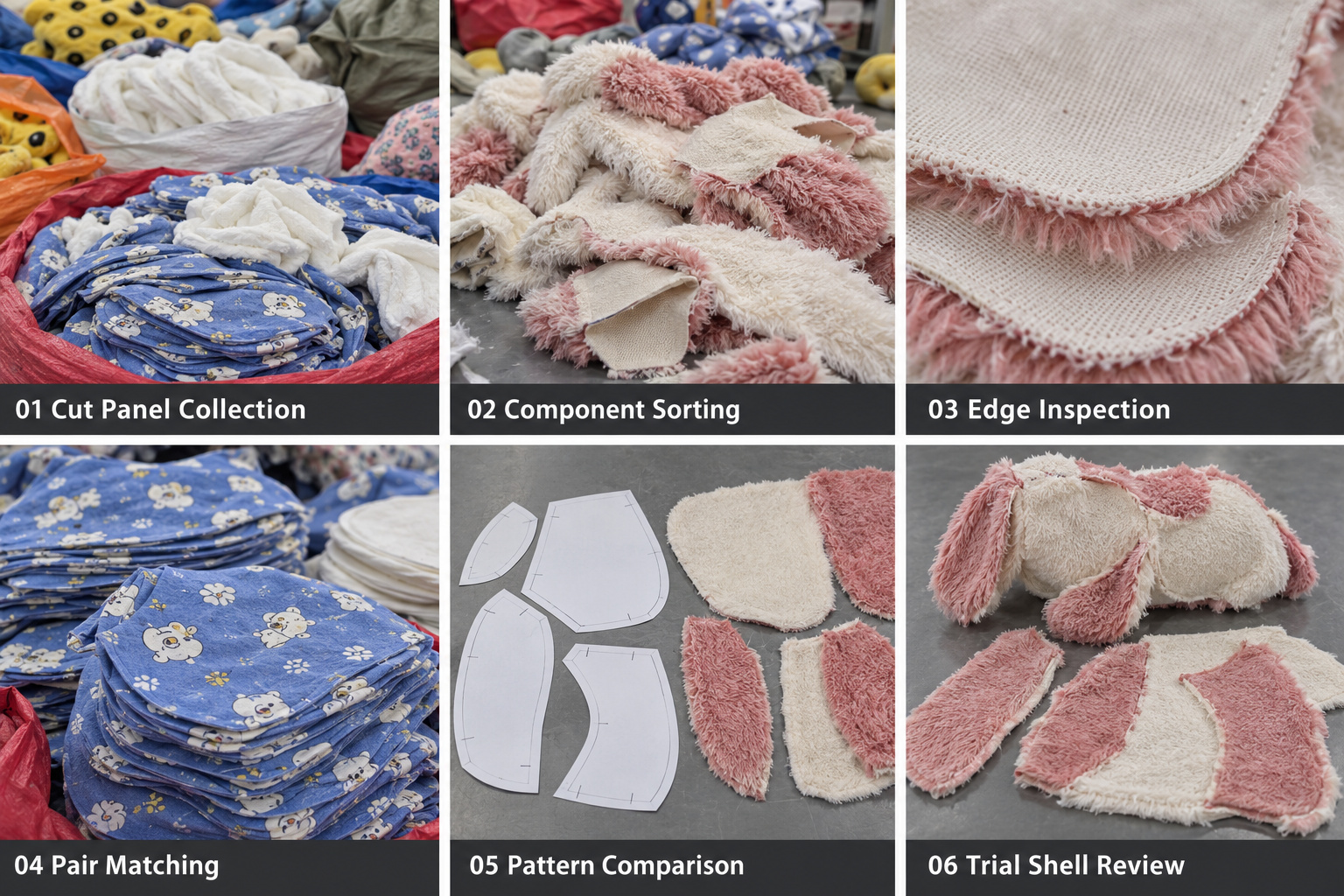
During bulk cutting, checks focus on panel dimensions, edge condition, orientation and component completeness. Relevant pieces should remain identifiable by design, size and fabric color to reduce mixing during sewing.
Small panels, curved edges and attachment sections need particular attention because cutting differences can affect seam placement and assembly. Damaged or incorrectly oriented pieces should be separated for review. The approved pattern version and reference sample remain the basis for comparison when cut panels move into sewing.
Cost, MOQ and Scheduling Considerations
Pattern complexity, panel count, fabric width, pile direction and print alignment affect material consumption and cutting work. A small toy with many separate pieces may require more handling than a larger, simpler design.
MOQ and timing also depend on fabric availability, color quantities and sampling revisions. Late changes after material allocation or cutting can create waste and delay assembly. For a quotation, send the design reference, finished dimensions, fabric preference, quantities per color, branding positions and required shipment window. Pawlenzo will review the cutting and sampling requirements with the production partner before confirming order terms.