


Bringing Product Parts into the Finished Construction
Pet toy assembly brings prepared fabric shells, rope sections, molded parts and specified accessories into the approved construction. Finishing then addresses loose threads, excess material, exposed ends and appearance details before final inspection.
Pawlenzo coordinates these stages with suitable production partners for wholesale and OEM dog and cat toy orders. The assembly route depends on the selected design. We review connection methods, component placement and finishing requirements against the approved sample and specification sheet.
Confirming Parts and Assembly Sequence
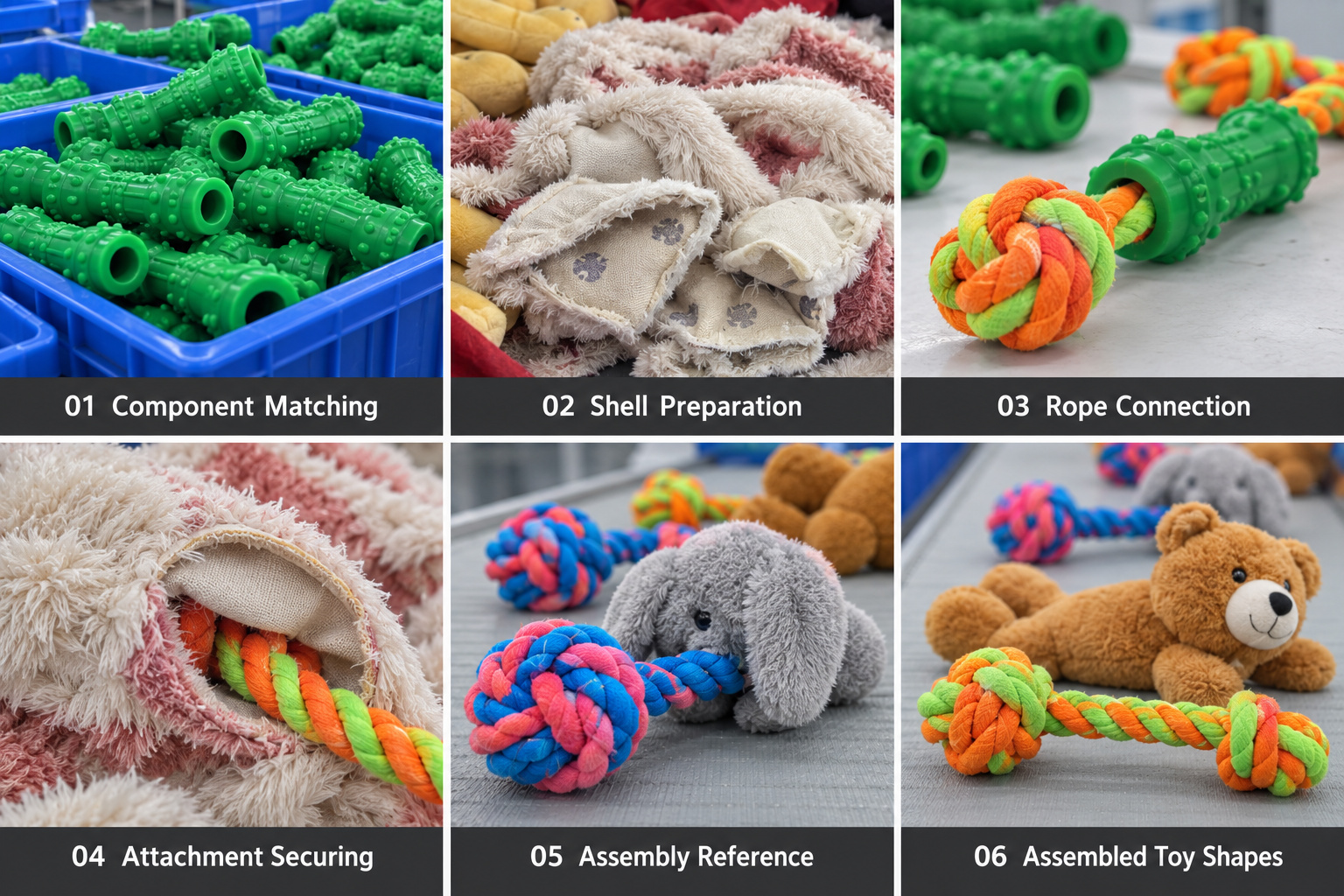
Before assembly, components should be matched by product reference, size, color and specification. Similar-looking parts can differ in opening size, rope diameter or attachment position, affecting fit and finished dimensions.
The production sequence must allow access to internal connections before closures are completed. Branding and sewn labels also need defined positions so they remain visible and correctly oriented. For products containing sound components, squeaker and component assembly requirements are confirmed alongside the surrounding construction.
 Connections, Closures and Component Fit
Rope-to-plush connections require an agreed insertion position and seam arrangement. Molded components need compatible openings and a defined retaining method. Fabric attachments must be positioned consistently without obstructing the intended function.
Closures are reviewed after internal parts and filling have been placed. Where adhesives or additional fasteners are proposed, their suitability and processing requirements need separate confirmation. A connection that appears neat may still require mechanical testing under agreed conditions; appearance checks alone do not establish strength or durability.
Trimming and Appearance Finishing
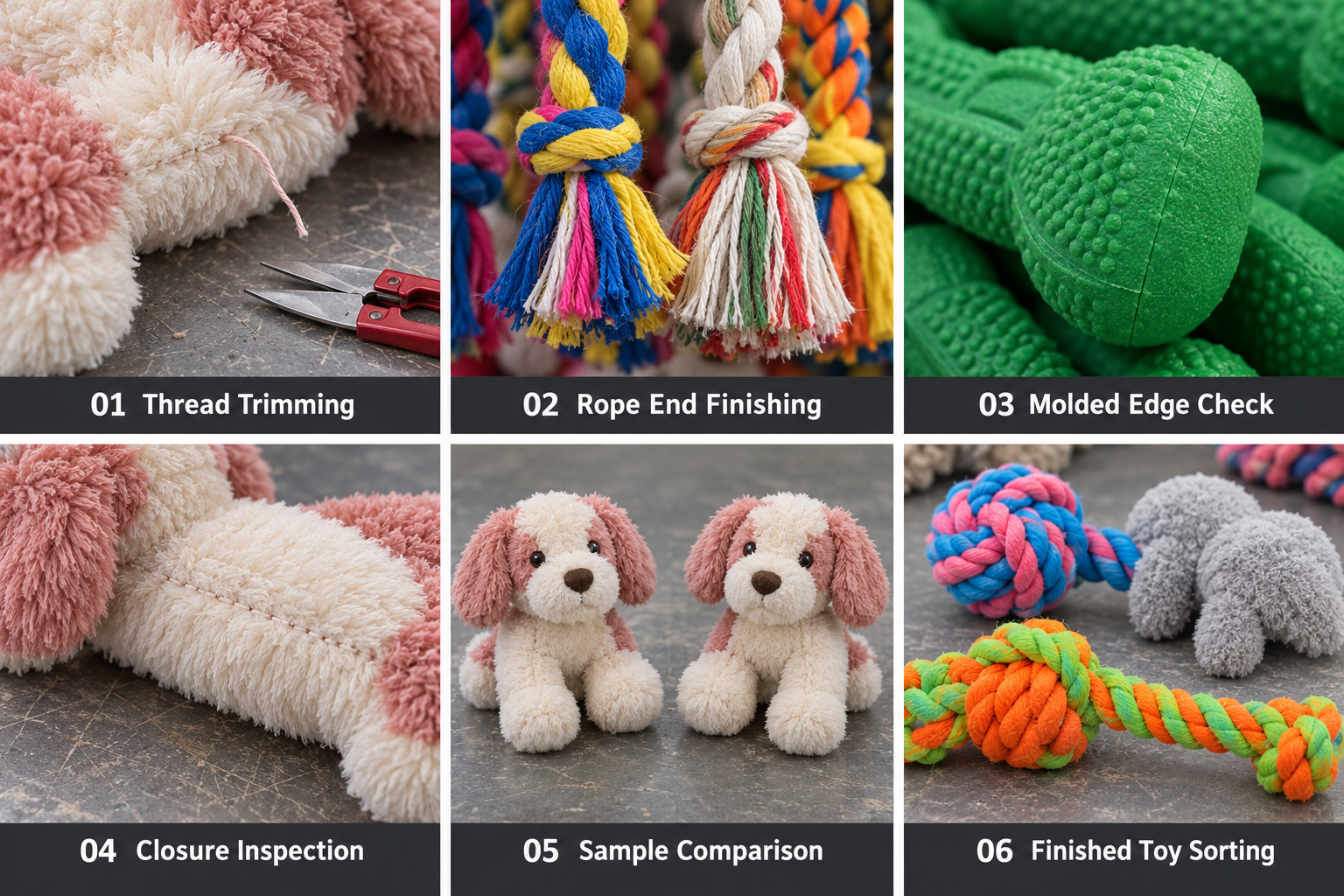
Finishing requirements differ by material. Plush toys may need thread trimming, removal of loose surface fibers and adjustment of pile around seams or embroidery. Rope designs require consistent exposed-end lengths and removal of unintended loose strands.
Molded parts may require flash removal and edge finishing without cutting into the intended shape or texture. The approved reference should establish acceptable appearance, including visible seams and normal material characteristics. Finishing must preserve attachment construction, branding and functional openings.
Trial Approval and In-Process Review
A trial assembly helps identify mismatched parts, distorted shapes, uneven closures and finishing details that were unclear in the initial brief. Our sample development process provides an opportunity to resolve these issues before bulk work.
During production, agreed checks may cover overall dimensions, component alignment, attachment placement, surface condition and intended operation. Changes to a component or connection method require review against the approved construction. Differences should be recorded, with rework and reinspection arranged as agreed before products proceed.
 Final Inspection and Packing Handover
Finished toys move to final quality inspection against the agreed product and order requirements. Relevant checks include appearance, dimensions, function, branding and completeness.
Accepted items must remain identifiable by SKU and color through packing. Packaging should protect projecting parts, preserve the intended shape and avoid unnecessary pressure on functional components. Mixed assortments require clear quantities and packing instructions so assembly completion matches the shipment plan.
What We Need for a Quote
Send product references, dimensions, materials, component details and quantities per design and color. Include logo or label positions, packaging, inspection requests, destination and preferred shipping terms.
Assembly complexity, connection methods, finishing work and component availability affect cost, MOQ and lead time. Pawlenzo will review the requirements with the production partner and clarify sample approvals before confirming bulk order terms.