


Build a Defined Color Range
Pawlenzo supports color and pattern requests for dog and cat toys, coordinating material selection and sampling with suitable production partners. This service suits private label brands, importers and wholesale buyers planning coordinated assortments or updating an existing design.
A useful brief identifies the main body color, contrasting sections, rope combinations and any printed pattern. Send product references and quantities per color so we can distinguish available material options from changes requiring separate sourcing or development.
 Confirm Color References on the Selected Material
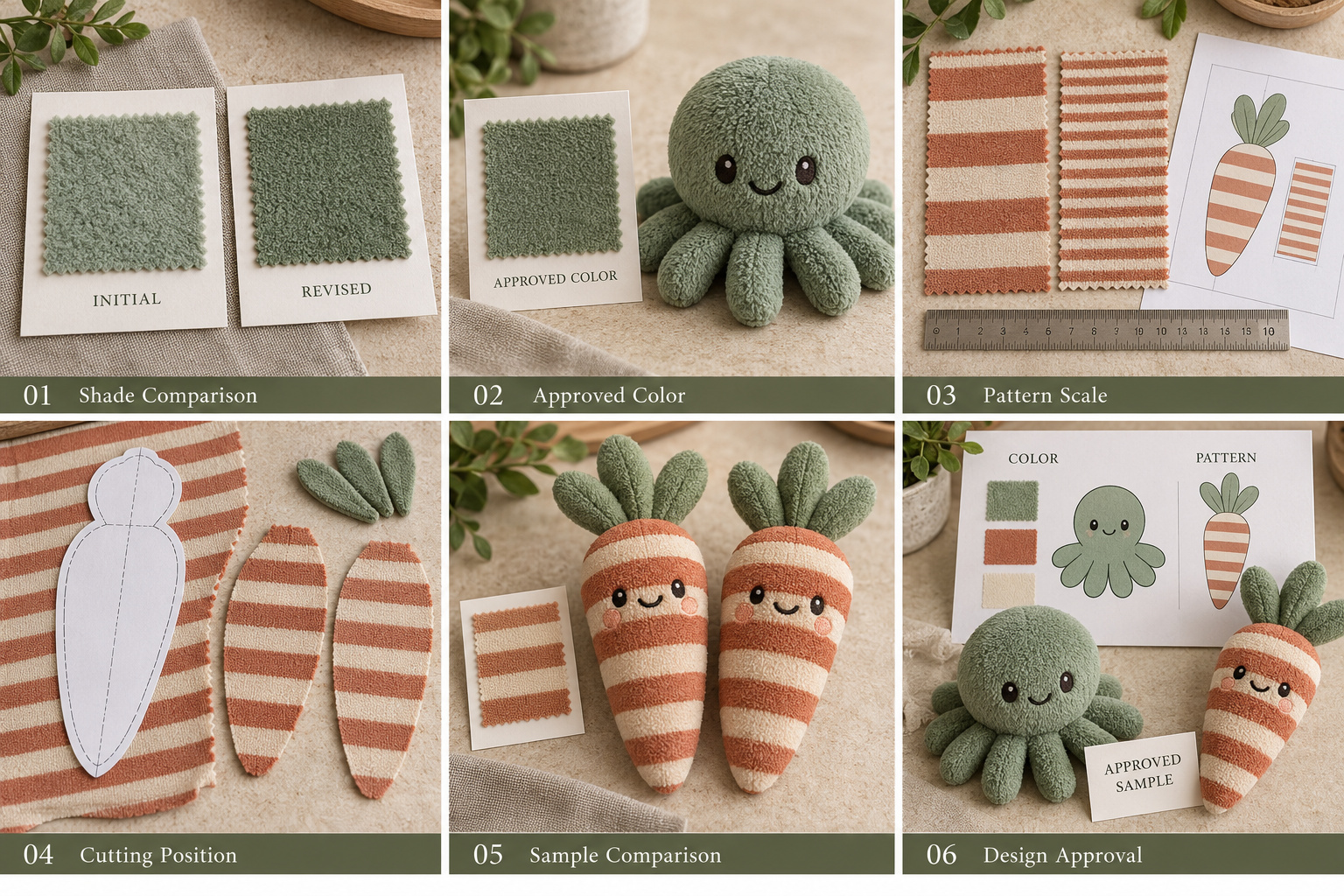
Provide a physical reference or a recognized color code where available. Screen images help communicate direction, but lighting, display settings and surface texture can change perceived color. Plush pile, cotton rope and molded materials may look different even when targeting a similar shade.
Our material and fabric options review helps establish a practical starting point. We check whether a suitable existing shade is available or whether a custom color needs evaluation. The approval reference should identify the material and shade together.
Define Patterns, Scale and Placement
For patterned fabrics, specify the artwork, repeat size, orientation and preferred coverage. Stripes, dots and repeated motifs can appear differently once fabric is cut, sewn and filled. A small fish toy may show only part of a large repeat.
If a motif must sit in a particular position, mark it on the product drawing. Placement requirements can affect cutting layout, material usage and cost. We review the proposed method with the production partner before confirming feasibility, particularly around seams, curves and contrasting panels.
Coordinate Rope and Molded Color Combinations
Rope specifications should identify each strand color and the intended combination. Knotting and braiding change how much of each color remains visible. Review the finished rope sample rather than approve loose yarn colors alone.
For rubber/TPR toys, define whether the design uses one color or requires multiple colored sections. Multi-color construction needs a product-specific process review. Material opacity and surface finish also affect appearance, so color approval should use a representative sample of the proposed material.
Approve Samples Before Bulk Materials
Through sample development, buyers can review shade, contrast, pattern scale and placement on the toy. Record the approved artwork version and physical references, including any agreed variation limits.
A material or construction change may require renewed color confirmation. For repeat orders, confirm that the reference remains current and that the selected material is available. Photos can support communication, but should not replace physical comparison when shade consistency is an acceptance requirement.
 Review MOQ, Inspection and Packing
Color minimums depend on fabric sourcing, rope components, molded material batches and quantities per design. Several colors may require separate minimums. Sampling charges and timing depend on whether existing materials can be used or new development is needed.
Agreed in-process quality inspection checkpoints can cover shade references, panel combinations and pattern orientation. Required colorfastness or other testing must be confirmed separately. Packing instructions should identify quantities per color and any assortment rules before shipment preparation.
Send Your Color and Pattern Brief
Send product references, color samples or codes, artwork files, pattern dimensions and quantities per design and color. Include packaging assortments, destination-market requirements and the requested shipment window.
Pawlenzo will review feasible options, clarify sample approval requirements and outline the effects on quotation, MOQ and production timing.