


Matching Components to the Toy Construction
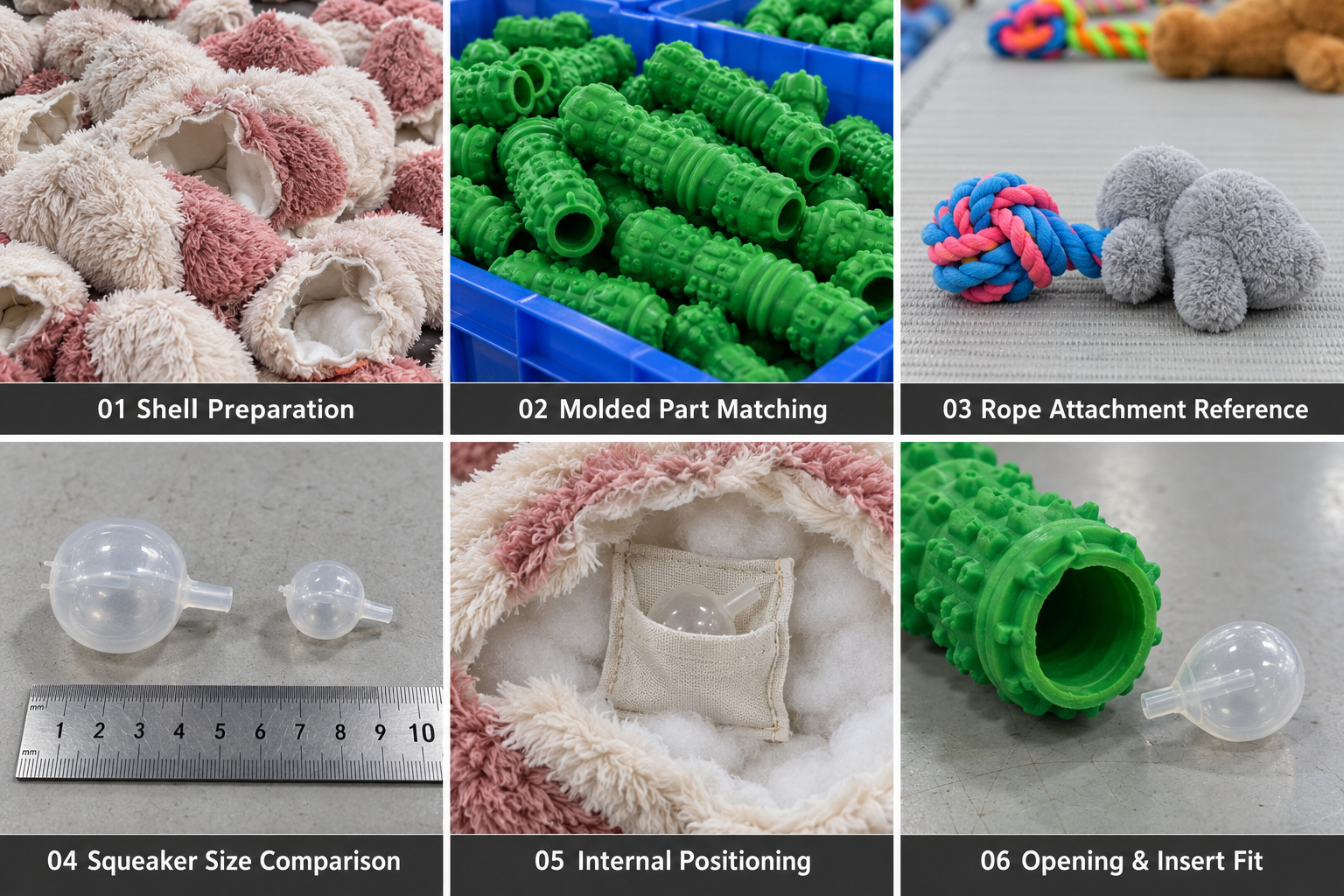
Squeakers, rope sections, fabric attachments and molded inserts must fit the selected pet toy construction. Component size, position and connection method affect appearance, function and the assembly sequence.
Pawlenzo coordinates suitable production partners for wholesale and OEM dog and cat toy orders. We review the approved sample, component requirements and inspection responsibilities before bulk assembly. A part that fits one design may require a different opening, retaining structure or production sequence in another.
Confirming Squeaker Size, Position and Operation
Squeaker selection starts with the available internal space and intended activation point. Buyers should provide a reference sample or explain the required sound and operating response. Sound can change after installation because the surrounding material, filling and enclosure affect how the component operates.
For plush toys, positioning must be reviewed alongside filling distribution and closure access. Molded toys require a compatible opening and retention arrangement. Our squeaker and functional customization review identifies changes that need sampling before an order can be confirmed.
 Retention and Attachment Methods
Components need a defined connection or retaining method appropriate to the materials. Depending on the design, this may involve a sewn pocket, captured fabric section, fitted insert or another construction confirmed with the production partner.
Rope-to-plush connections require sufficient insertion length and a suitable seam arrangement. Rope-to-molded connections depend on opening size, rope diameter and the agreed knot or retaining structure. Adhesives, where proposed, require separate review for material compatibility and processing requirements. Visual fit alone does not establish attachment strength; relevant checks must be agreed for the actual construction.
Sample Assembly Before Bulk Production
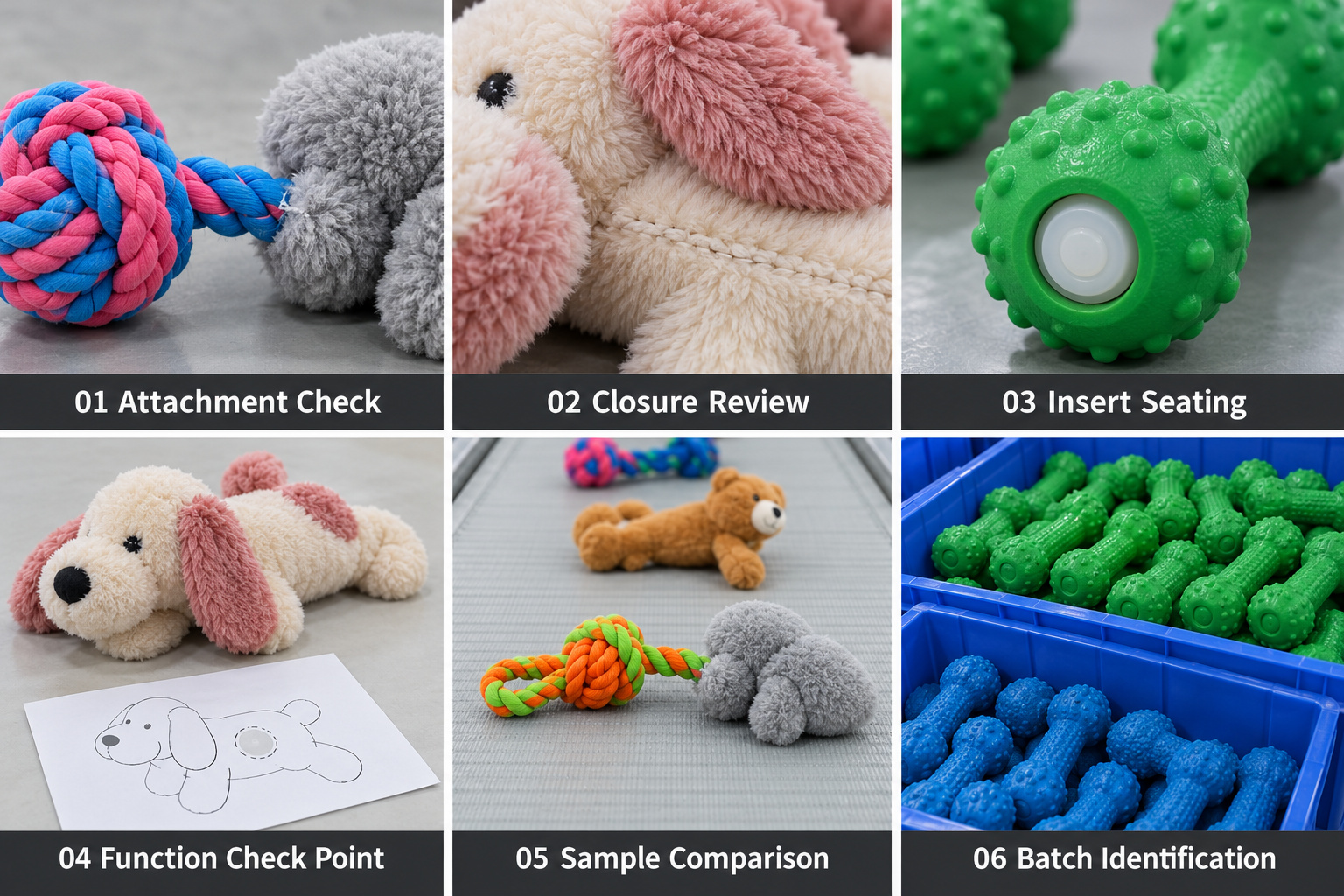
Trial assembly checks whether the specified parts work together without distorting the toy or obstructing its function. Typical issues include a squeaker sitting too close to a closure, an insert that does not seat consistently, or a rope connection that changes the finished dimensions.
Through sample development, the buyer confirms component identity, placement, connection details and the finished result. An approved component list and reference sample help control later purchasing and assembly. Substituting a similar-looking part requires review if its dimensions, material or operating response differ.
In-Process Function and Construction Checks
Agreed checks may include component count, positioning, seating, seam closure, visible gaps and squeaker operation. Inspection should compare the assembled toy with the approved reference, including how the function is activated.
Any pull, retention or repeated-operation test needs a defined method and acceptance criteria. Our in-process quality inspection approach links these checks to the selected product. Differences are recorded for review, with rework and reinspection arranged as agreed. One successful function check does not establish long-term durability.
 Cost, Scheduling and Packing Requirements
Component availability, assembly complexity and additional checking affect sample cost, MOQ and production timing. A new squeaker, revised opening or extra attachment can require another approval round.
Send the toy reference, dimensions, component details, quantities, branding, packaging and destination. Include requested tests, shipping terms and delivery dates. Packing should protect projecting parts and avoid unintended squeaker activation or deformation. Pawlenzo will review component sourcing, assembly requirements and outstanding approvals before confirming bulk order terms.