


Turn Your Product Brief into a Defined Toy
Pawlenzo supports custom pet toy projects for brands, importers, distributors and wholesale buyers. We review your reference images, drawings or existing samples, then coordinate suitable production partners for the proposed construction.
Projects may involve adapting an existing plush, rope or rubber/TPR toy, or evaluating a different shape and component arrangement. The first step is to identify what needs to change and which details must remain consistent. This gives sampling and quotation a clear starting point.
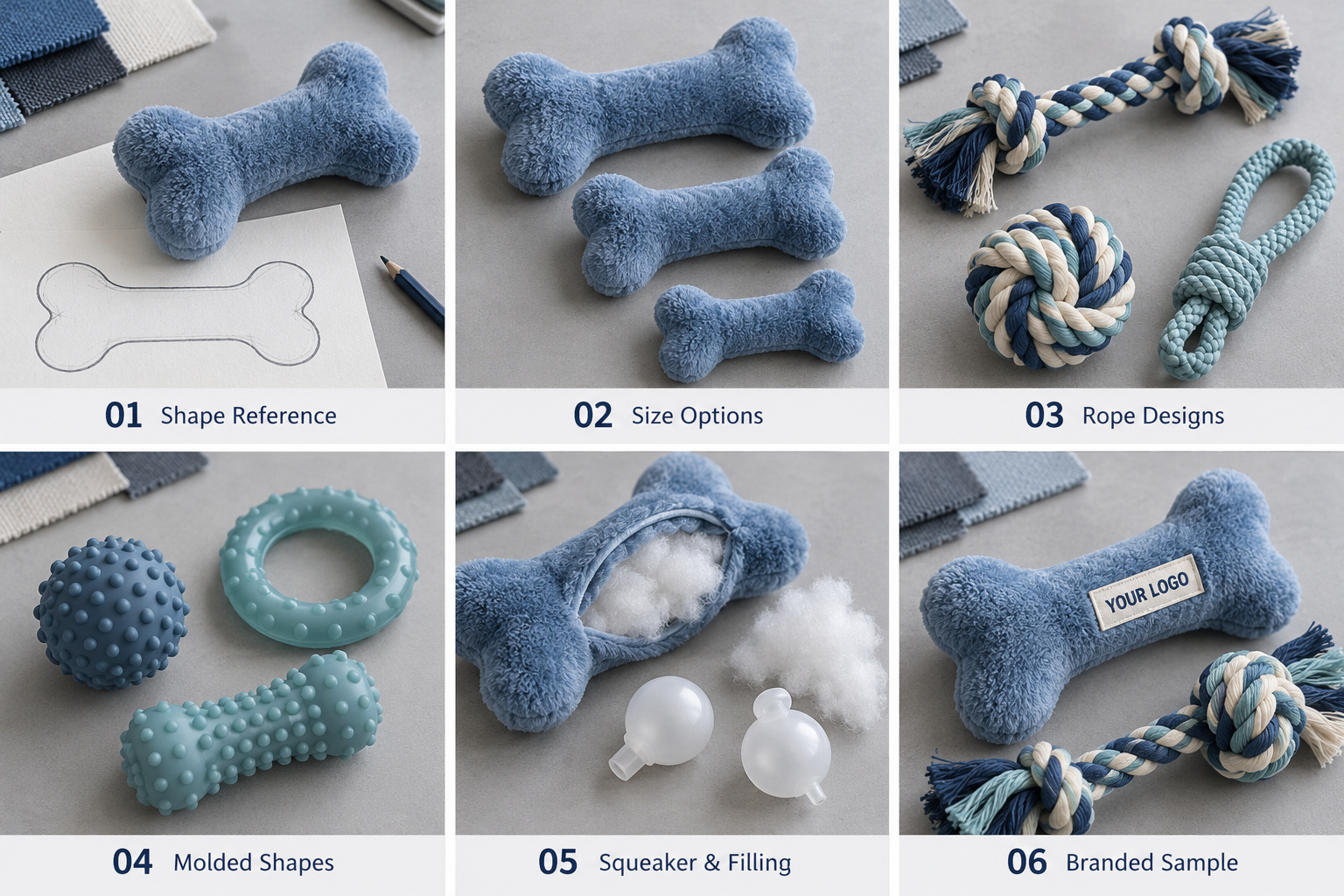 Confirm Shape, Size and Intended Use
A toy brief should explain the intended play function, approximate dimensions and target pet size. A plush toy for gentle interactive play needs a different construction review from a rope tug toy or a molded treat-dispensing design.
Dimensions should identify the measurement points, including projecting parts, rope sections and attachments. For pet toy sizes and shapes, we review whether an existing pattern or mold is suitable. Changes to proportions, openings or internal space may require additional development.
Match Materials and Components to the Design
Material choices affect appearance, handling, construction and cost. For plush designs, the brief should identify fabric texture, filling and seam requirements. Rope products need fiber, diameter and knot details. Rubber/TPR projects require a material and molding review with the responsible production partner.
Squeakers and attachments also need defined positions and fixing methods. A larger squeaker may change the toy’s internal layout, while a rope connection may need a revised seam or molded opening. Requested changes are assessed together rather than treated as separate decorative options.
Develop and Approve a Representative Sample
A reference photo can communicate appearance, but it rarely defines every production detail. Before sampling, we clarify the proposed materials, dimensions, components and branding positions. Any unresolved points should be recorded so the buyer knows what the sample will demonstrate.
Our sample development process establishes the review steps and comparison reference. Buyers should assess shape, feel, construction, function and appearance. Sample charges, revision requirements and timing depend on the work involved. Approved changes are recorded in the sample or specification file before bulk arrangements are confirmed.
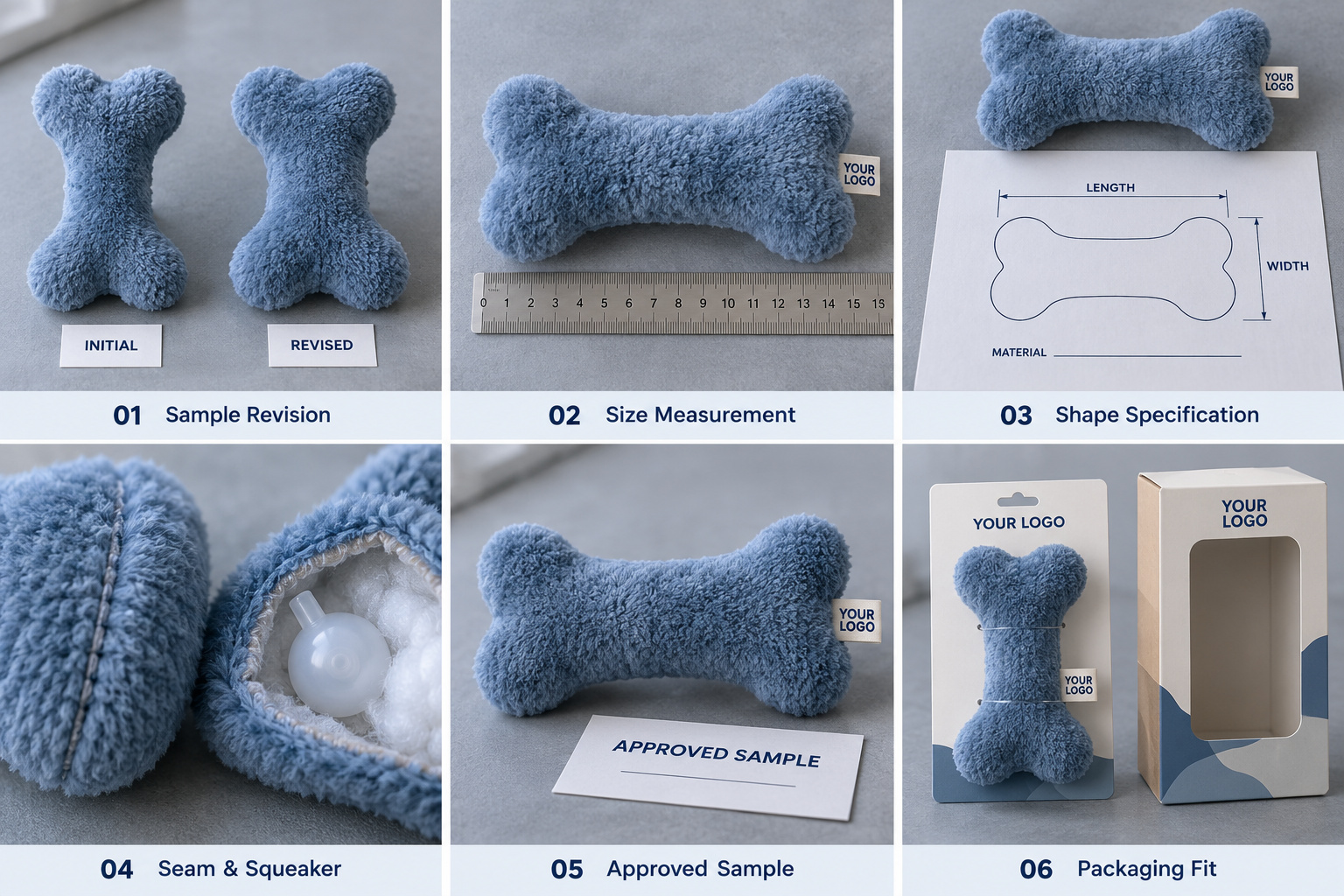 Plan Branding and Packaging Alongside the Toy
Branding should be reviewed while the construction is still being confirmed. A sewn label needs an appropriate seam position; embroidery or printing needs a suitable surface and usable area. Buyers should provide artwork, dimensions and placement instructions.
Packaging must fit the approved product, including attachments and any multi-piece assortment. Through custom pet toy packaging, we review bags, cards, boxes and carton instructions. Final product dimensions should be confirmed before packaging dimensions are approved.
Understand MOQ, Cost and Production Timing
MOQ depends on the design, materials, quantity per color, components and packaging. A new mold or specially sourced fabric may introduce minimums that differ from an existing style. Quotations should identify development or tooling charges separately where applicable.
Production timing is reviewed against sample approval, material availability and order quantity. Agreed inspection points may cover dimensions, seams, attachment security, function and packing. Additional testing must be specified and confirmed. Shipping terms and the requested dispatch window are reviewed with the order requirements.
Send Your Custom Pet Toy Requirements
Send reference images or drawings, intended use, dimensions, preferred materials and quantities per design and color. Include branding files, packaging preferences, destination country and any required inspections or tests.
Pawlenzo will review feasible sourcing and sample options, clarify outstanding details and prepare product-specific quotation requirements.