


Review Finished Goods Against the Approved Order
Final quality inspection brings together the product, branding and packing requirements agreed for a wholesale or OEM order. It helps buyers review finished goods before shipment preparation and identify differences that require action.
Pawlenzo Pet Toys coordinates the inspection scope with the responsible production partners. Checks are based on the approved sample, current specifications, confirmed artwork and packing instructions. Inspection timing, product readiness and reporting requirements should be agreed before the order reaches its final stage.
Confirm the Inspection Reference and Sampling Plan
The inspection reference should identify each SKU, size, color, material, component and packaging version. Where several designs share one order, clear references help prevent mixed specifications or incorrect assortments.
Buyers should confirm whether inspection follows an agreed sampling plan or includes full checks of specified features. A sampled inspection covers selected units; its report should clearly state the quantity inspected and any limitations.
Any required defect classifications, acceptance limits or third-party inspection arrangements need confirmation in advance. Changes made during sample development should also appear in the final order reference.
Check Appearance, Dimensions and Construction
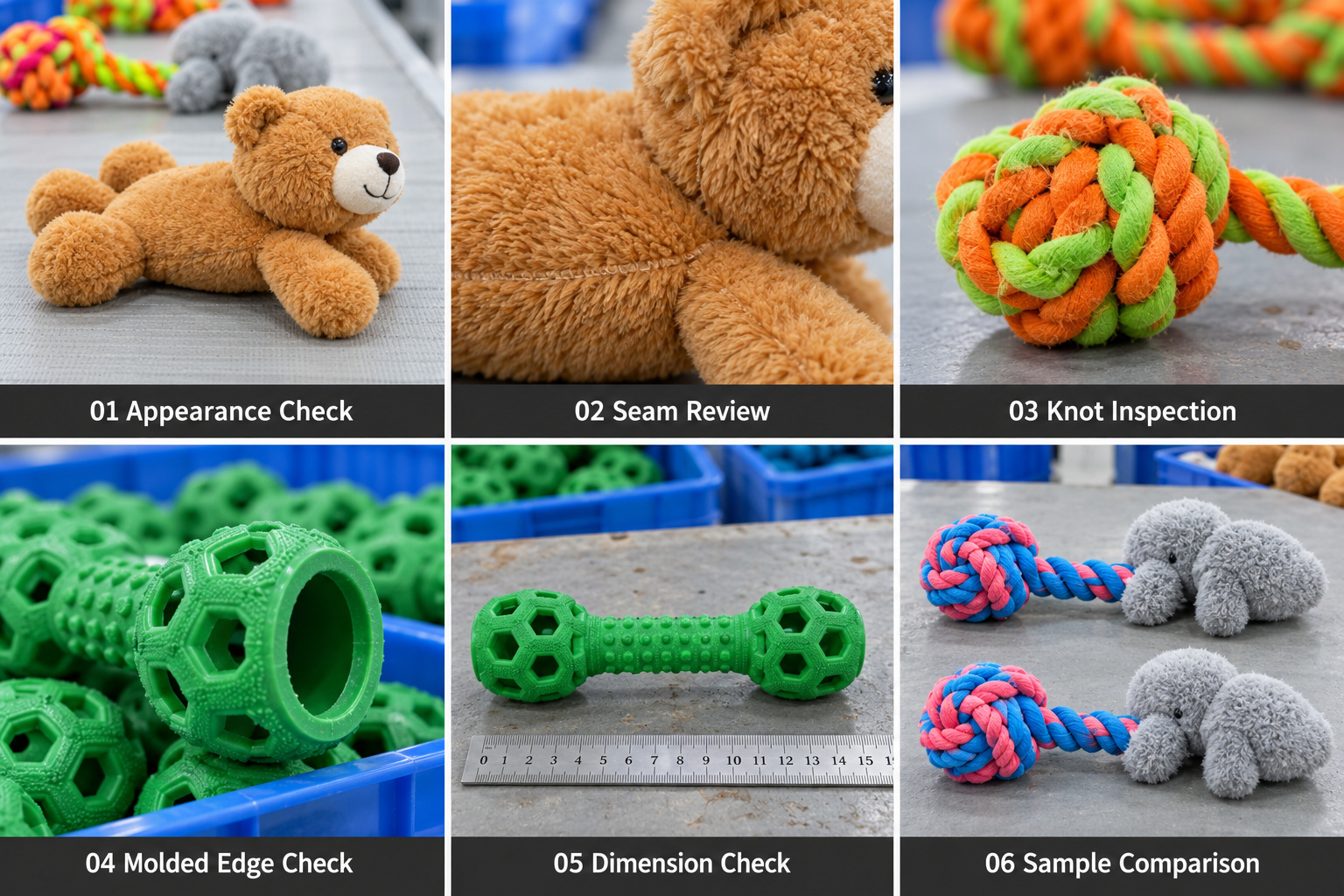
Appearance checks may cover stains, visible damage, inconsistent colors, loose threads, uneven filling and unfinished edges. Dimensions and weight can be compared with the agreed specification using suitable methods and tolerances.
Construction checks vary by toy type. Plush toys require attention to seams, closures and attachments. Rope toys may need checks of length, knots and connections. Molded rubber and TPR toys may require review of shape, openings, surface finish and component fit.
These checks build on in-process quality inspection, helping identify differences that remain in the finished goods.
 Verify Functions and Component Completeness
For relevant designs, final checks may include squeaker response, moving parts, treat openings and the presence of specified components. Component placement and attachment should match the approved construction.
Routine function checks have a defined scope. They do not establish long-term durability or replace separately agreed laboratory testing. Where an order requires specific function and durability testing, the applicable method, sample selection and results should be reviewed separately.
Match Labels, Packaging and Order Quantities
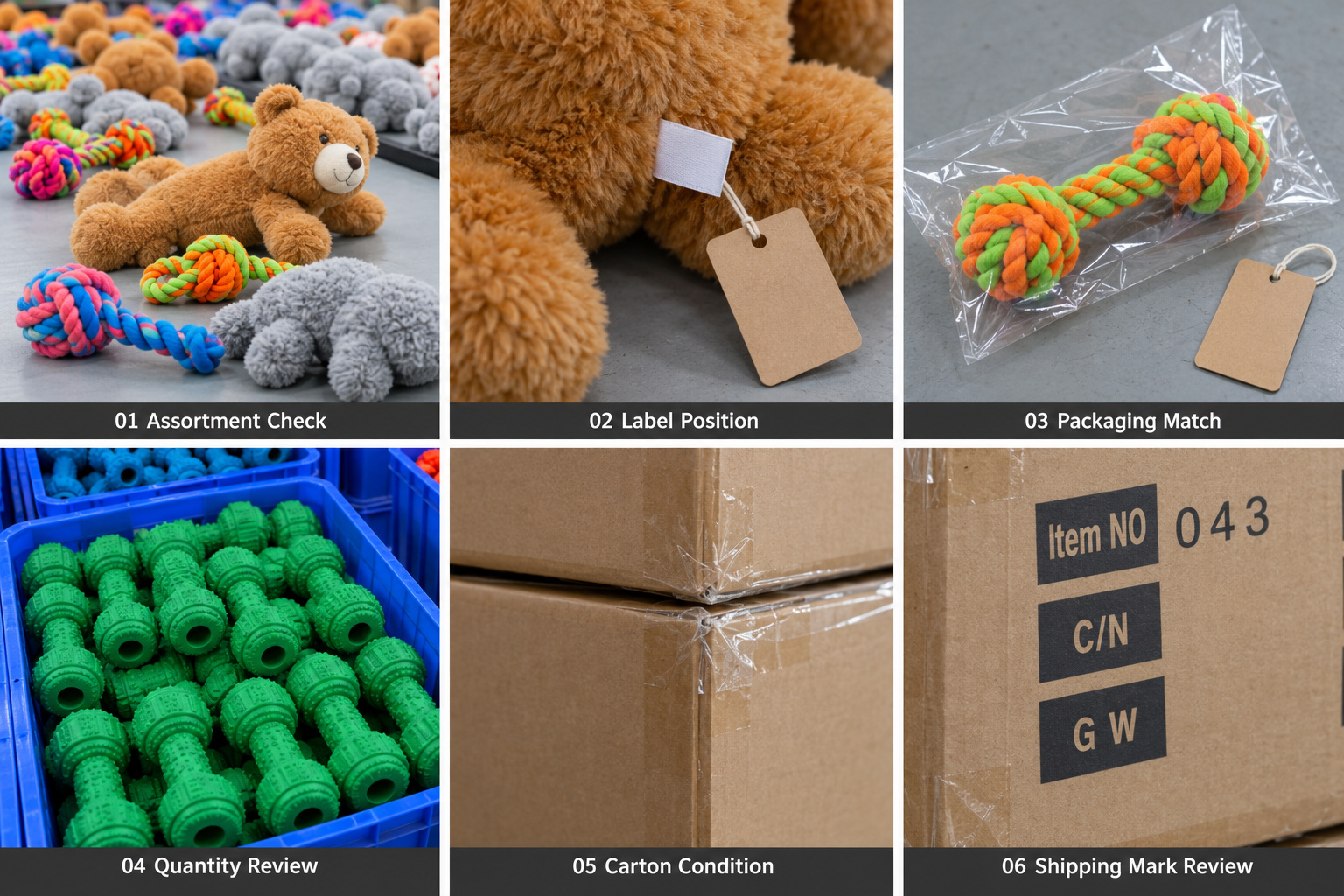
Correct products also need the correct presentation. Packaging checks may cover logo artwork, hangtags, sewn labels, barcodes, product identification and buyer-supplied instructions or warnings.
The packing review can include assortment ratios, unit packing, carton quantities, protective materials and shipping marks. Particular attention is needed when similar toys have different labels or destination-specific packaging.
Required barcode scanning, carton measurements or packed-weight checks should be included in the agreed inspection scope.
 Record Findings and Confirm Corrective Action
Inspection findings should identify the affected SKU, inspected quantity, observed issue and relevant reference. Photos and measurements can make differences easier to assess.
Depending on the finding, action may include sorting, rework, replacement or buyer review. Any required reinspection should be completed and recorded before the affected goods proceed. Unresolved issues should be communicated alongside their possible effect on the shipment schedule.
What We Need for a Quote
Send your product reference, specifications, quantity by SKU, logo artwork, packaging requirements, destination and shipping term. Include your inspection checklist, sampling requirements, report format and any third-party arrangements.
We will review the requested scope and coordinate inspection timing with product readiness and packaging and export preparation.