


Define Testing Around the Toy’s Intended Use
A plush squeaky toy, a rope tug and a molded rubber toy require different checks. Product construction, intended play activity, dog or cat size, and buyer requirements help determine which functions and connections need attention.
Pawlenzo Pet Toys coordinates product-specific testing requirements with the responsible production partners. Before sampling or bulk production, we review what needs checking, the proposed method, acceptance criteria and any reporting requirements. Testing availability, costs and timing are confirmed for the selected product.
Establish a Clear Sample Reference
Useful results depend on a defined reference. Material, dimensions, filling, seams, rope construction and internal components should match the specification being evaluated.
During sample development, buyers can identify critical features and request suitable checks before approving the design. Where a test reveals a concern, the proposed material or construction change should be reviewed and, where necessary, checked again.
An approved appearance sample alone does not establish a durability standard. Any required force, number of cycles or other measurable criterion needs separate agreement.
Check Squeakers and Interactive Functions
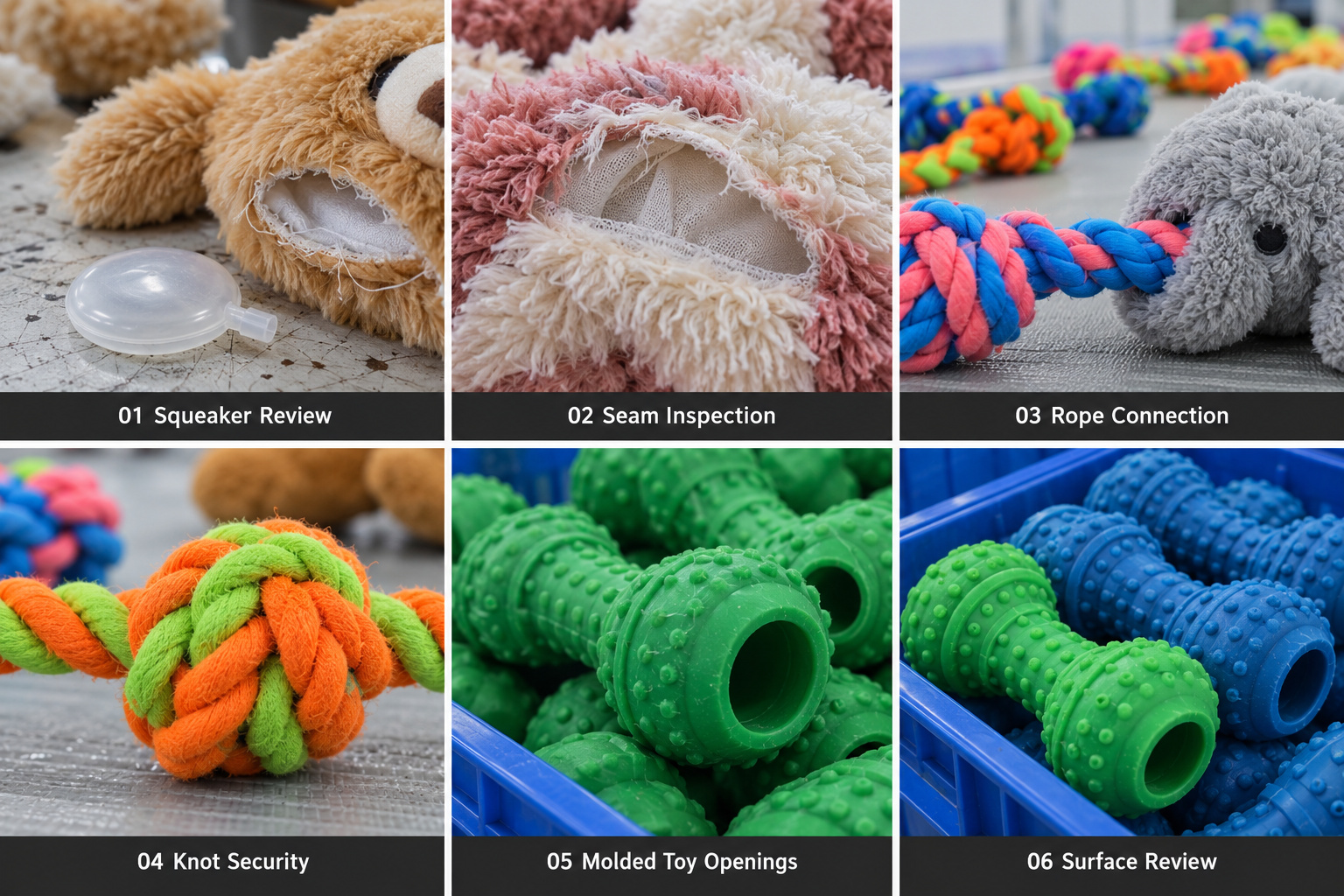
For squeaky toys, checks may cover sound response, activation consistency, component positioning and performance after repeated compression under agreed conditions. The surrounding construction also needs review because a working squeaker must remain appropriately contained within the toy.
For interactive designs, relevant checks may include movement, access to treat openings and the fit of connected parts. The scope depends on the design; a simple squeeze check cannot establish every aspect of long-term performance.
See squeaker and component assembly for related construction considerations.
 Review Seams, Rope Connections and Molded Parts
For plush toys, durability checks can focus on seam openings, attachment points, closures and filling containment. Rope toys may require review of knot security, braid consistency, end finishing and connections to plush or molded components.
For rubber and TPR toys, suitable checks may address deformation, recovery, cracking or separation at vulnerable areas. Material hardness, wall thickness and shape can affect performance, so results should relate to the actual construction being ordered.
Where pull, tension or repeated-action testing is requested, the method and suitable equipment must be confirmed before results are promised. No pet toy should be described as indestructible.
Review Results Before Confirming Changes
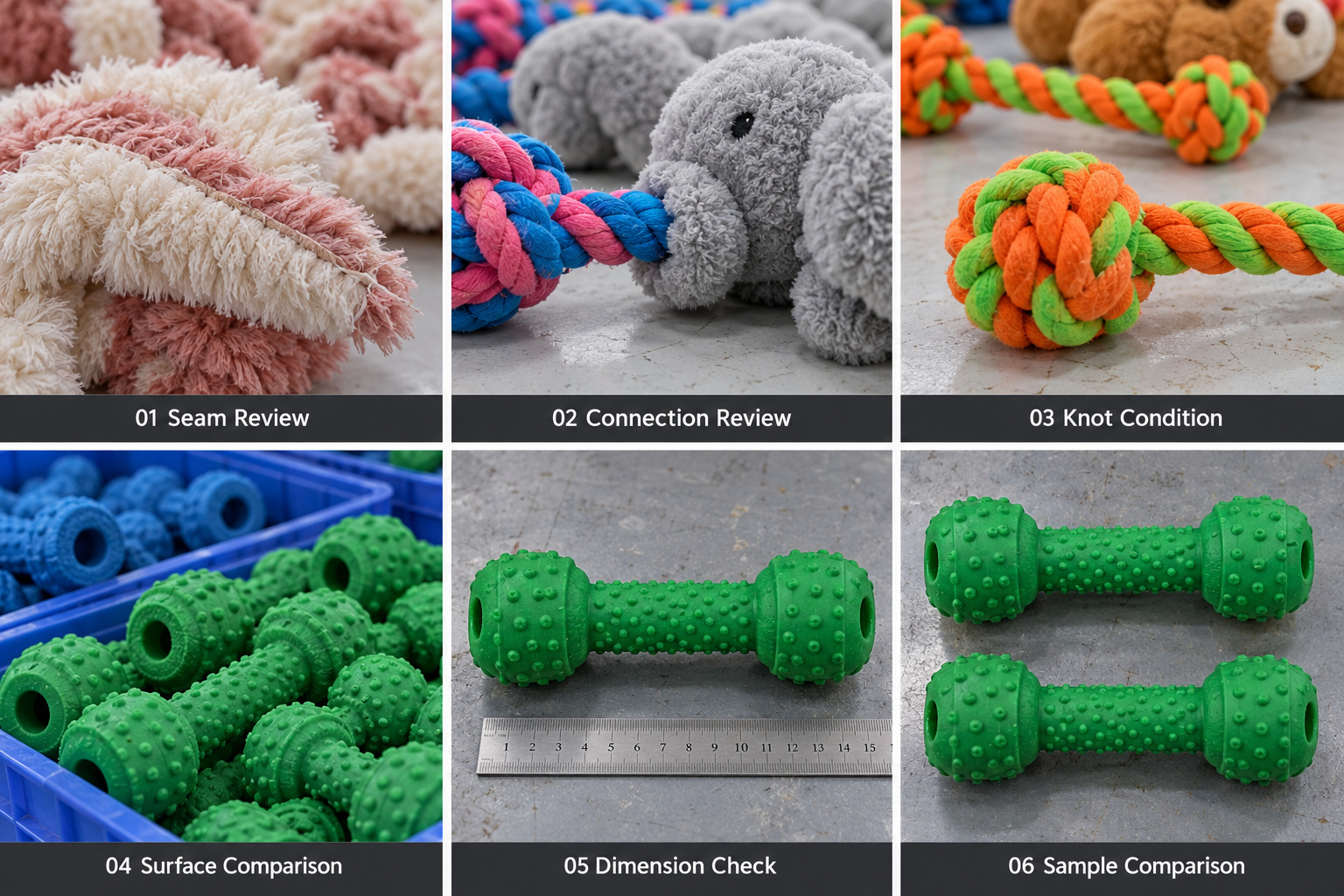
A useful test record identifies the product version, sample quantity, method, conditions and observed result. Photos can help explain seam opening, component movement or visible material damage.
If a sample does not meet the agreed requirement, possible actions include adjusting the material, reinforcing a connection or revising the component fit. Changes can affect appearance, cost and production timing. Buyers should approve the revised reference before it is applied to the bulk order.
 Agree on Bulk Order Verification and Testing Scope
Sample testing helps evaluate a design, while in-process quality inspection helps monitor whether production follows the agreed specification. Bulk verification requirements should identify when samples are selected and which checks are repeated.
Routine function checks do not replace laboratory testing. Chemical testing, destination-specific requirements and third-party services need a separately confirmed scope, laboratory arrangement and schedule.
What We Need for a Quote
Send your toy reference or drawing, materials, dimensions, intended use, estimated quantity, logo and packaging requirements, destination and shipping term. Include any required test methods, acceptance limits or reports.
We will review sample needs, available testing arrangements and the effect on quotation and delivery planning.