


Define Labels and Hangtags by Their Purpose
Pawlenzo supports label and hangtag development for dog and cat toy orders, coordinating component specifications and sampling with suitable production partners. We help private label brands, importers and wholesale buyers align product identification with their approved designs.
Start by separating permanent sewn labels from removable paper hangtags. A brand label, product information label and barcode tag may need different materials, dimensions and positions. Confirm what each component must communicate before combining several functions into one small layout.
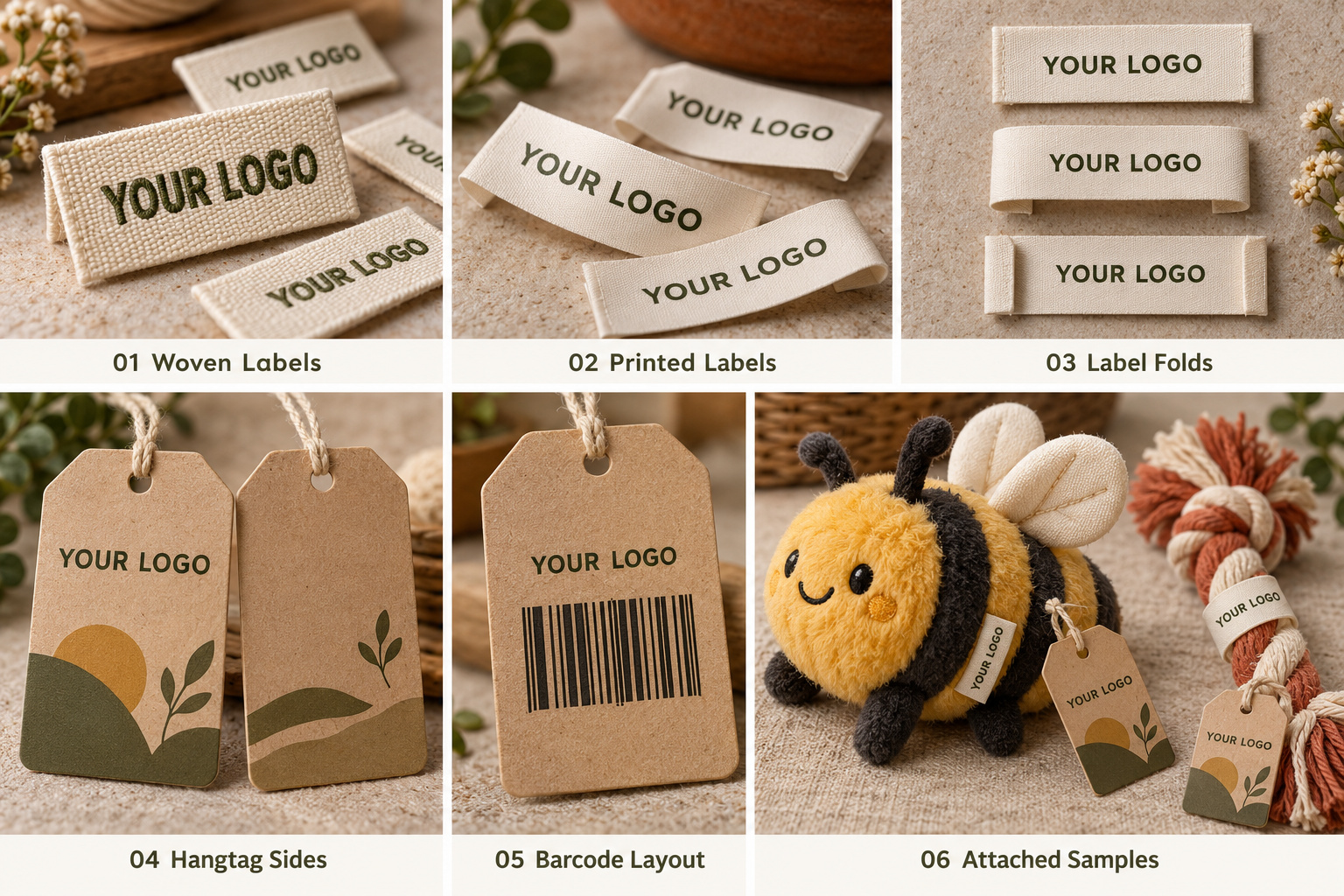 Choose Label Materials, Folds and Dimensions
Woven labels suit defined brand graphics, while printed fabric labels can accommodate additional text where the material and print method allow. Readability depends on lettering size, contrast and the finished label dimensions.
Specify whether the label is flat, center-folded or requires folded ends. Include both the visible area and the section captured inside the seam. A label that looks suitable as a loose sample may become difficult to read once folded or sewn into a curved product.
Confirm Hangtag Layout and Barcode Space
Provide the required tag dimensions, paper preference, front and back artwork, hole position and attachment method. Paper thickness and finish should suit the tag size and handling requirements without adding unnecessary bulk.
Barcode artwork needs a clear area with suitable contrast and margins. Buyers should supply the correct code and product association for each SKU. Visual layout approval does not establish scan performance; any barcode verification requirement should be agreed separately. Broader presentation choices can be reviewed through custom pet toy packaging.
Position Attachments Around the Toy Construction
Sewn labels need an accessible seam and sufficient allowance for secure attachment. Review the visible label length, orientation and contact with nearby rope sections or functional parts. Adding a label after the toy is closed may require a different operation.
Hangtags should remain readable without distorting the toy or obstructing its packaging. The attachment method needs product-specific review. Avoid assuming that the same cord, fastener or location suits plush, rope and molded designs.
Approve Physical Samples and Final Content
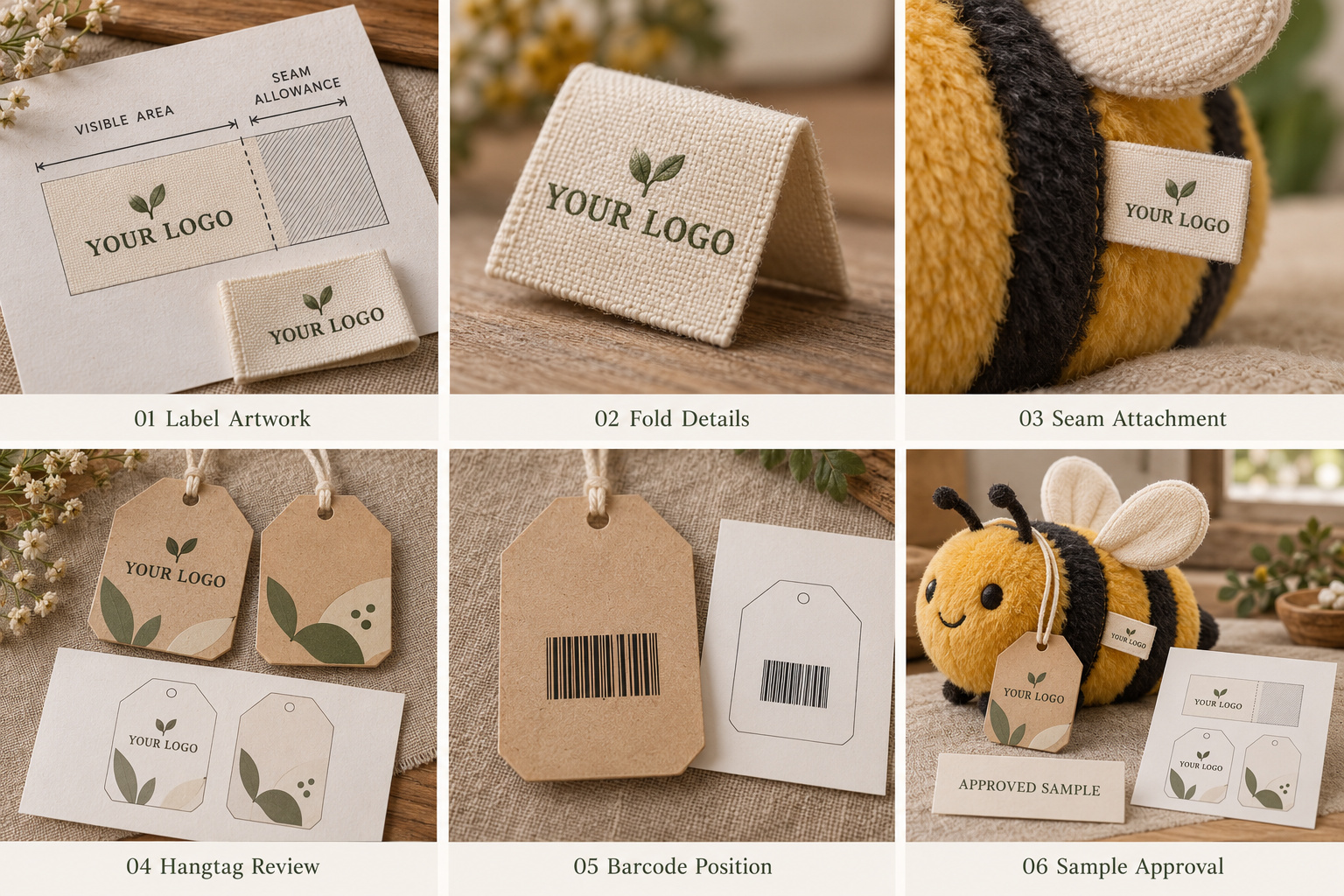
Our sample development review can cover loose labels, folded samples, printed hangtags and their placement on a representative toy. Confirm text, colors, dimensions, fold direction, hole position and attachment details.
Buyers should provide and approve required product information, warnings, language versions and destination-specific content. Record the final artwork revision and the SKU assigned to each version. Material or layout changes after approval may require another proof or sample.
 Review MOQ, Inspection and Packing
Labels and hangtags may have minimum quantities separate from the toys. Several artwork versions, paper finishes or language combinations can affect cost and timing. Quotations should identify component quantities, setup charges where applicable and the attachment work included.
Agreed checks can cover print content, woven detail, folds, cut edges, stitching and version matching. During packaging and export preparation, packing instructions should keep each SKU paired with its approved tag and label. Shipment planning must account for component arrival and final packing.
Send Your Label and Hangtag Requirements
Send product references, artwork, finished dimensions, fold preferences and quantities per version. Include barcode files, required text, attachment positions, packaging instructions and destination country.
Pawlenzo will review suitable options and clarify the sampling, quotation and production requirements for your order.