

Build a Pet Toy Range Around Your Brand
Pawlenzo supports private label pet toy projects for pet brands, importers, distributors and retail buyers. Product options include plush, rope, rubber and TPR toys, with branding and packaging reviewed against the selected design.
A private label order can start with an existing toy design or a reference product that needs adjustments. We coordinate product specifications, samples and order requirements with suitable production partners. Feasibility, minimum quantities and development costs are confirmed for each project.
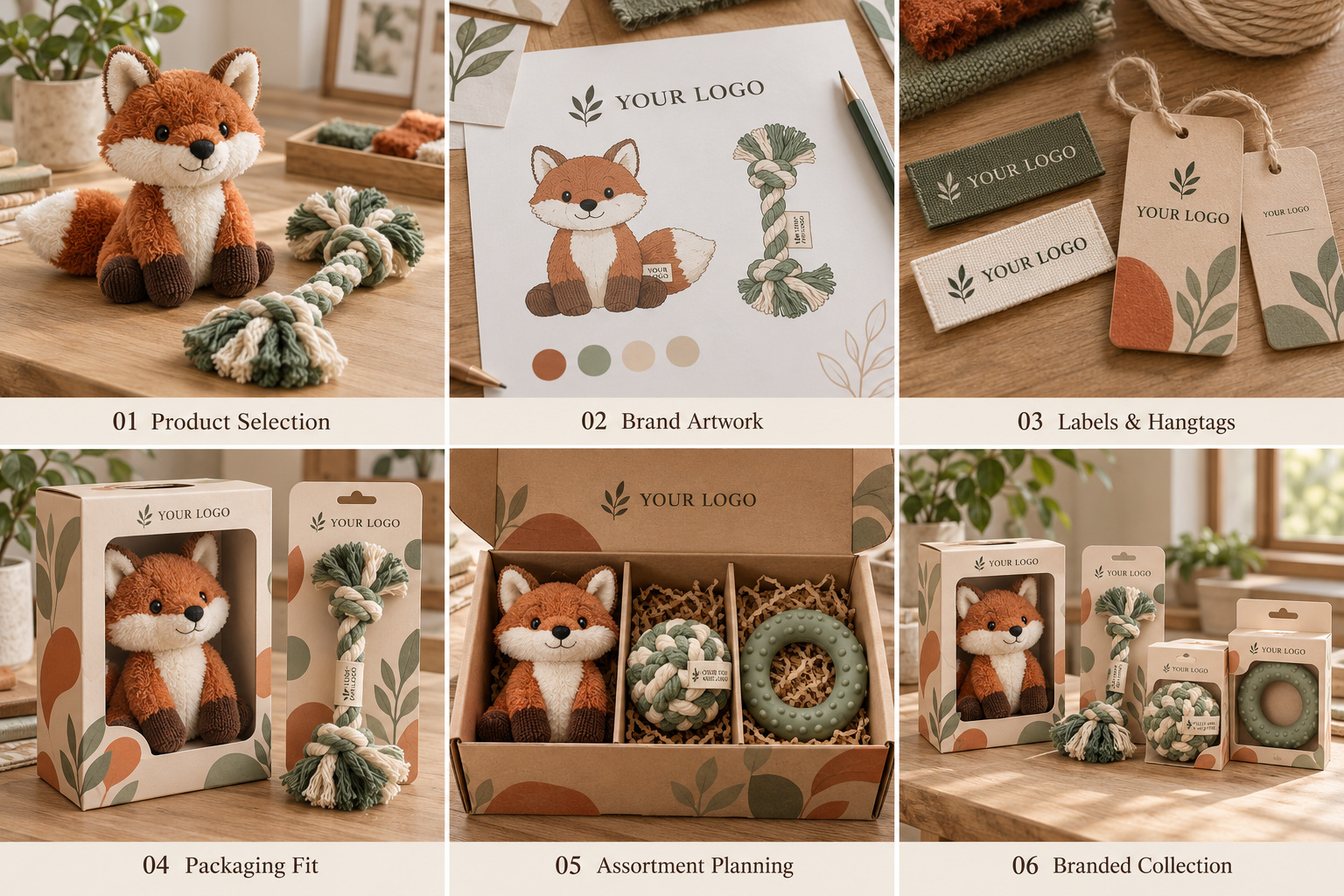 Select Products and Define Each SKU
Start with the product types, target pet size and intended play function. A compact range might combine a plush squeaky toy, a rope tug and a molded toy, but each item needs its own specification.
For every SKU, confirm dimensions, materials, colors, internal components and packaging format. Where several products share the same branding, check whether label sizes and artwork can remain consistent across different toy shapes.
If the project requires changes to the product itself, review those separately through our custom pet toy development support. New shapes or molded parts may introduce additional sampling or tooling requirements.
Match Branding to the Toy Construction
Branding methods depend on the available surface and how the toy is assembled. A sewn label may suit a plush side seam, while a fabric band may be more practical on a rope toy. Embroidery or printing requires a suitable application area.
Provide editable logo artwork, preferred colors, placement and approximate dimensions. Small lettering and fine lines may need adjustment to remain readable.
Our logo and branding options help establish an appropriate application method. Confirm the physical branding sample before approving the remaining order details.
Prepare Packaging and Buyer-Supplied Information
Packaging should fit the finished toy and suit your distribution requirements. Options for review include bags, backing cards, folding boxes and selected assortment formats.
Provide packaging artwork, barcode data, SKU references and any required product information. Market-specific wording and claims need buyer confirmation; certification marks should only appear when supported by applicable documentation.
Review our pet toy packaging options to define product fit, attachment points and carton requirements before artwork is finalized.
Approve the Complete Branded Sample
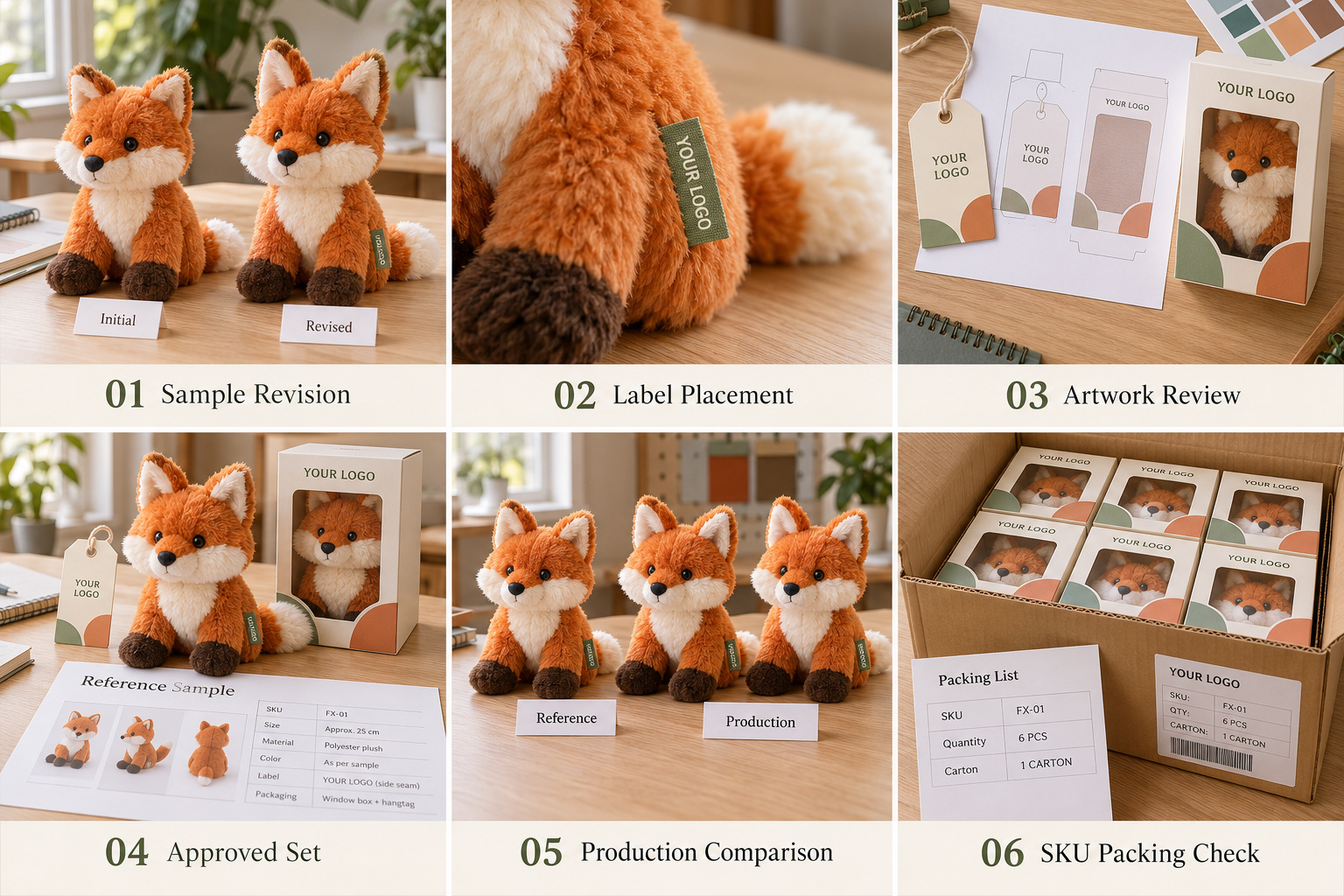
The approval sample should represent the agreed product, branding and packaging configuration. Check the toy’s dimensions, material appearance, component placement, label attachment and packaging fit together.
Record revisions against a dated specification and identify which sample becomes the production reference. If a packaging proof or component is approved separately, include that reference in the approval record.
Changes after approval require a further review of cost, materials and scheduling.
 Confirm Minimums, Timing and Production Checks
Minimum quantities depend on the toy, material colors, branding components and printed packaging. A mixed assortment does not automatically reduce the minimum for each individual item.
Sample costs and timing are reviewed after specifications are available. Bulk production scheduling also depends on sample approval, component availability and packaging readiness. Small trial orders can be assessed against the proposed configuration.
Agreed checks should cover product specifications, branding placement, workmanship, component assembly and packing accuracy. Any additional testing or third-party inspection requirements should be discussed before the order is confirmed.
Send Your Private Label Project Details
Send your selected products or reference images, quantities per SKU, target market, logo files and packaging preferences. Include any size changes, functional requirements and required delivery date.
We can then review the proposed range, identify details requiring confirmation and prepare a quotation with a practical sampling plan.