


Matching the Molding Route to the Product
Rubber and TPR pet toys require a production route suited to their material, shape and intended function. A solid ball, hollow squeaky toy and treat-dispensing design have different tooling, forming and assembly requirements.
Pawlenzo is a China-based pet toy supplier coordinating suitable production partners for wholesale and OEM orders. We review the proposed construction, material requirements and sample approval points before confirming bulk terms. Rubber and TPR are assessed separately; they should not be treated as interchangeable materials using one universal molding process.
Confirming Material, Hardness and Construction
Material selection affects flexibility, weight, surface feel and how the toy behaves during use. Buyers should provide the intended pet size, play function, finished dimensions and any reference sample.
Hardness alone does not establish durability. Wall thickness, openings, narrow sections and attachment points also influence product performance. Our material options review helps identify the proposed material and the details requiring sample confirmation. Any requested material change should be assessed for its effect on shape, function, cost and applicable testing.
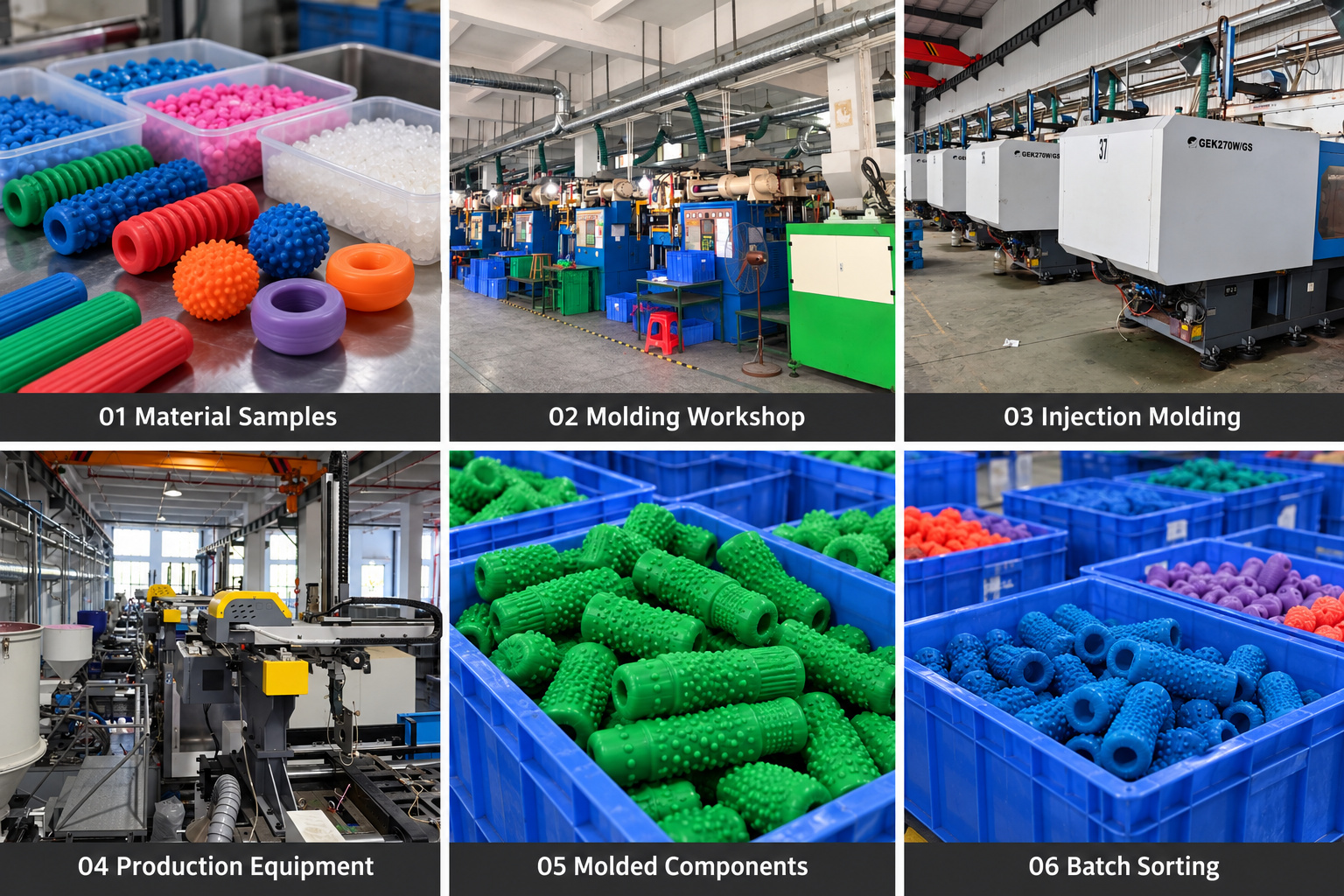 Tooling Review and Trial Molding
Before sampling, the production partner reviews whether existing tooling suits the requested dimensions, shape and functional details. Hollow sections, textured surfaces, openings and separate components can affect mold design and part removal.
A size or construction change may require modified or new tooling. Tooling charges, ownership, storage arrangements and expected development steps should be agreed before work begins. During sample development, trial parts are checked for dimensions, weight, appearance and intended function. Revisions must be approved before the tooling and specifications are released for bulk production.
Forming, Cooling and Trimming
The forming method depends on the selected compound and product construction. TPR commonly uses injection molding, while rubber products may require compression or other suitable molding processes with controlled curing conditions. The actual route is confirmed with the responsible production partner.
Material preparation, processing conditions and cooling or curing affect consistency. After removal from the mold, parts may require flash trimming and edge finishing. Openings and joining areas need particular attention because excess material or rough edges can interfere with assembly, appearance or function.
Inspection Before Assembly and Packing
Checks are agreed around the selected product and approved reference. They may include dimensions, weight, visible surface defects, deformation, openings and fit between components. Squeaky designs also require confirmation of the squeaker position, connection and operation.
Performance checks should reflect the intended construction and agreed conditions. Our function and durability testing page explains how test requirements are defined. Chemical laboratory testing is arranged where requested and confirmed; material descriptions alone do not establish compliance. Accepted parts proceed to assembly or packing, with protection appropriate to their shape and surface.
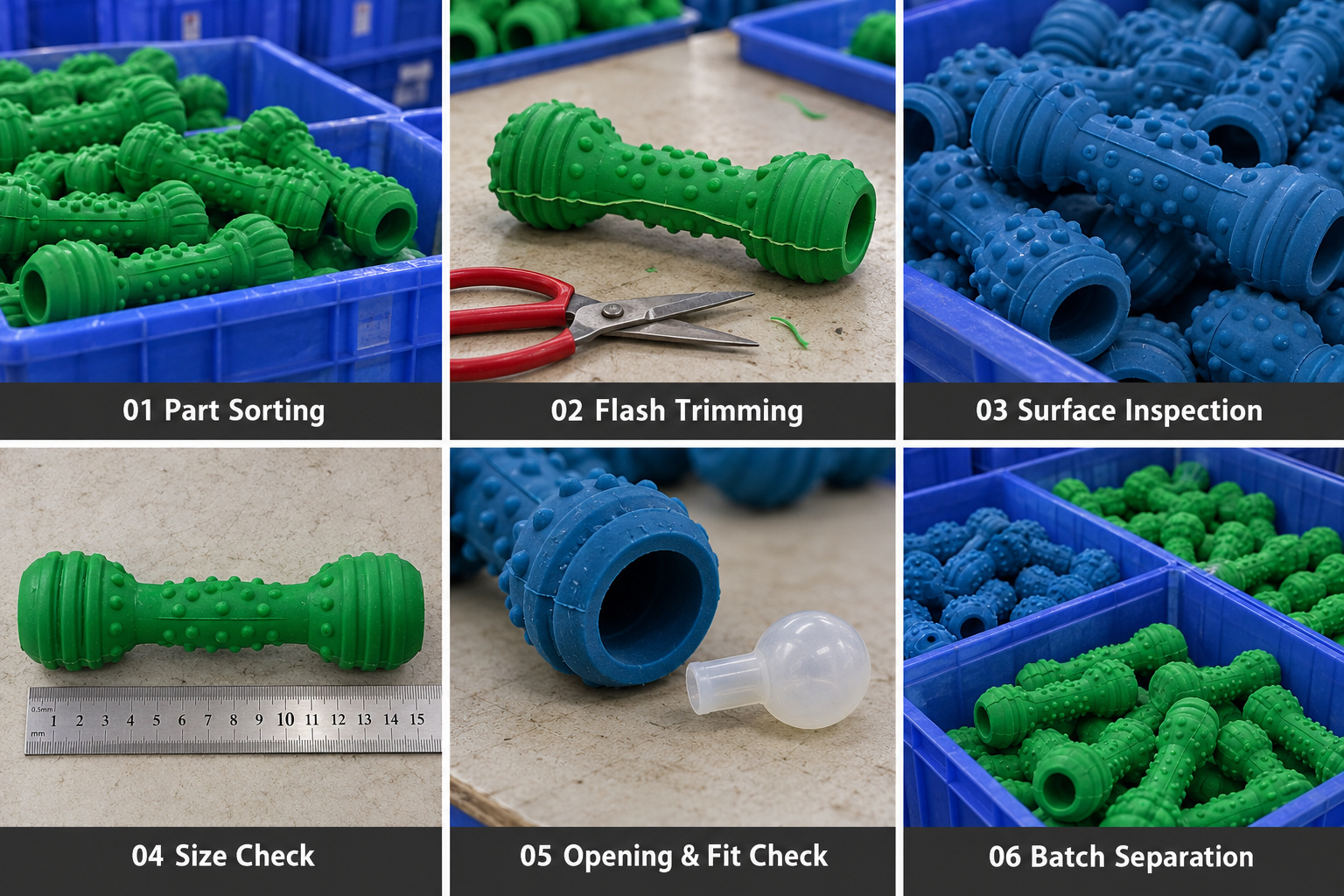 What We Need for a Molding Quotation
Send a product drawing, photograph or reference sample, together with dimensions, target weight, material preference, color and quantities per design. Include squeakers, openings, branding, packaging, destination and requested shipment terms.
MOQ and lead time depend on material availability, color quantities, tooling, sampling revisions and order volume. Pawlenzo will coordinate a feasibility review and identify the approvals needed before confirming the production window. Packaging and shipment requirements should be reviewed early so they are included in the quotation.