


Turn Your Reference Into a Defined Sample
Pawlenzo coordinates pet toy sample development for brands, importers and wholesale buyers preparing OEM or private label orders. Projects may start with a drawing, reference sample, selected product or written specification.
Sampling establishes how the proposed toy looks, feels and functions before production is approved. Plush, rope and molded toys require different development steps, so we review the construction with suitable production partners before confirming the sample scope.
An existing product sample helps assess a starting design. A development sample addresses agreed changes. Neither should be treated as the final production reference unless its specifications are confirmed.
 Provide the Details That Shape the Sample
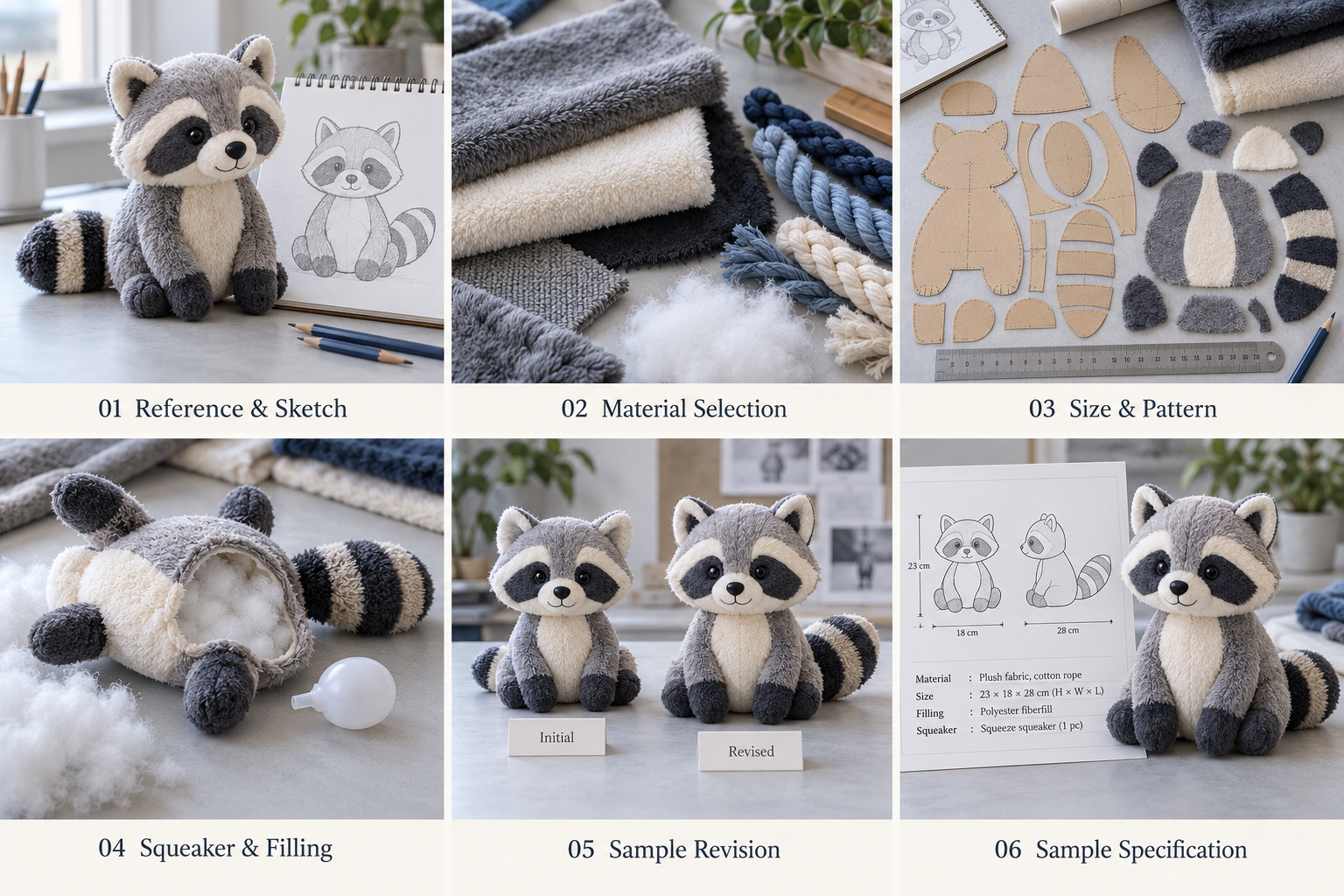
Send reference images or drawings with dimensions and clearly identify the features to retain or change. Include the target pet size, intended play function, material preferences, colors and expected order quantity.
For plush toys, define the fabric appearance, filling feel, seams and internal components. Rope toys need length, diameter, knot arrangement and connection details. Molded designs require a review of shape, wall sections, openings and tooling availability.
Our material and fabric options can help narrow the specification. If a requirement remains undecided, identify it before sampling so alternatives can be assessed without treating them as approved choices.
Agree on Sample Scope, Cost and Timing
Sample charges depend on pattern preparation, material sourcing, branding, component requirements and the number of versions requested. New molded shapes may require separate tooling work, which should be quoted and approved before proceeding.
Timing is confirmed after the development requirements are reviewed. Material availability, artwork readiness and revision rounds can affect the schedule. Sample dispatch and courier transit should be distinguished from the time needed to make the sample.
Where a substitute material is proposed for an early shape sample, record the difference. That sample cannot confirm the final material appearance or performance.
Review the Physical Sample and Record Revisions
Check the sample against the agreed specification rather than the reference photograph alone. Review overall shape, measurement points, material texture, filling distribution and component placement.
For functional designs, confirm the intended configuration, including squeaker position, rope connections or attachment construction. A working sample demonstrates the proposed arrangement; any specific durability or safety testing requires a separately agreed method and scope.
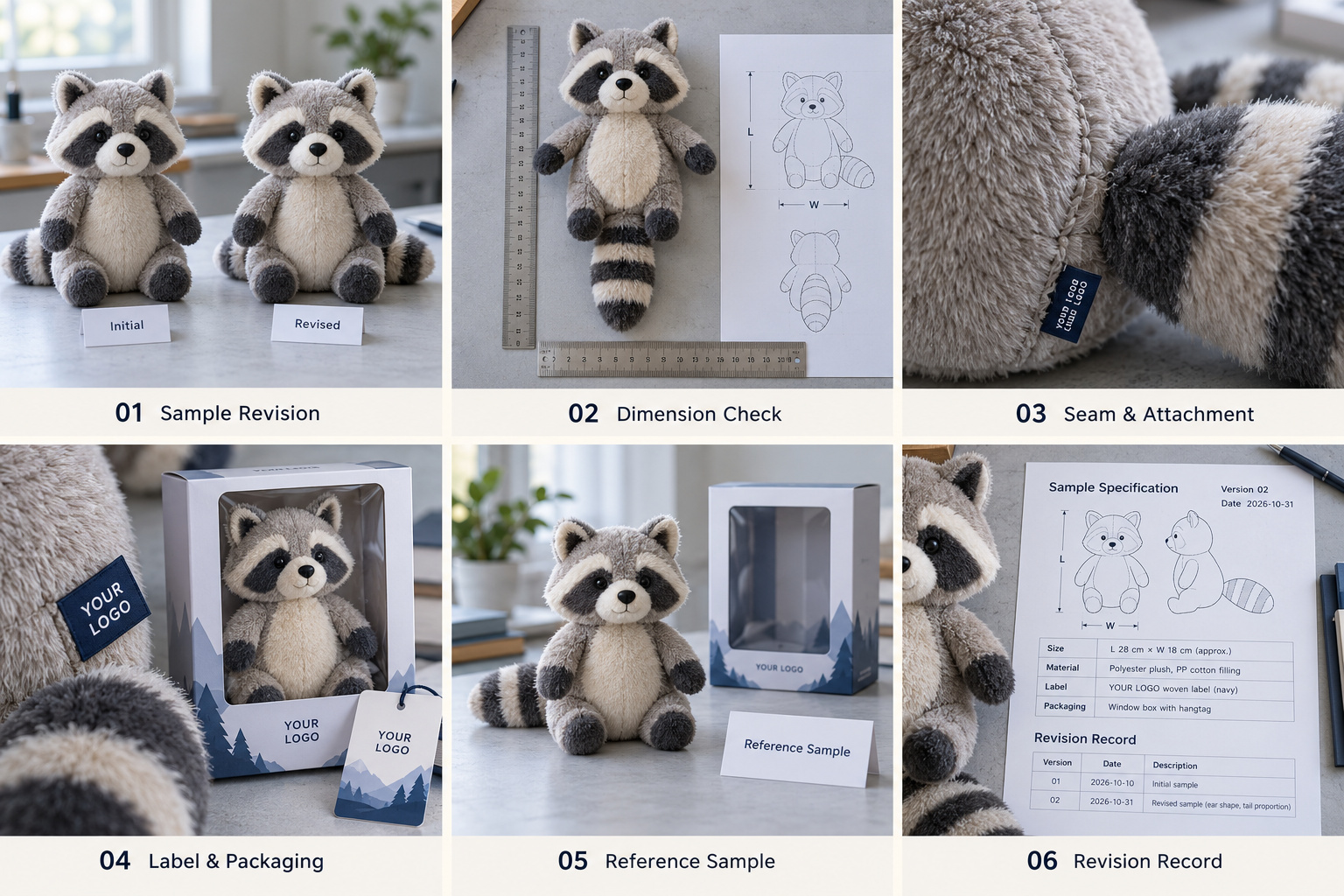
Return one consolidated revision list with marked photographs or drawings. Separate required corrections from new design requests, and confirm which changes need another physical sample.
Confirm Branding and Packaging Together
Logo placement, label attachment and packaging fit can change how the finished toy is assembled or presented. Include these elements in the sample review when they form part of the order.
Provide final artwork, label dimensions and packaging requirements. Our custom pet toy packaging support covers fit and layout considerations. Check the finished toy inside its proposed pack before approving box dimensions or fixing positions.
 Establish the Production Reference
Approval should identify the sample version, specification date, agreed materials, dimensions, components, branding and packaging. Record measurement methods and acceptable tolerances where relevant.
Any unresolved difference must remain visible in the approval record. Material substitutions or design changes after approval require review before use.
The approved reference supports production checks, while order quantities, inspection requirements and shipping arrangements are confirmed through the OEM order process.
Send Your Sample Development Request
Send your references, proposed specifications, quantities per design, target market and required delivery date. Include any existing samples available for review.
We can then assess feasibility, clarify missing details and prepare the sample quotation and development sequence.