


Define Dimensions Around the Intended Product
Pawlenzo supports size and shape adjustments for dog and cat toys, coordinating specification reviews and sampling with suitable production partners. This service suits brands, importers and wholesale buyers developing coordinated ranges or adapting an existing design.
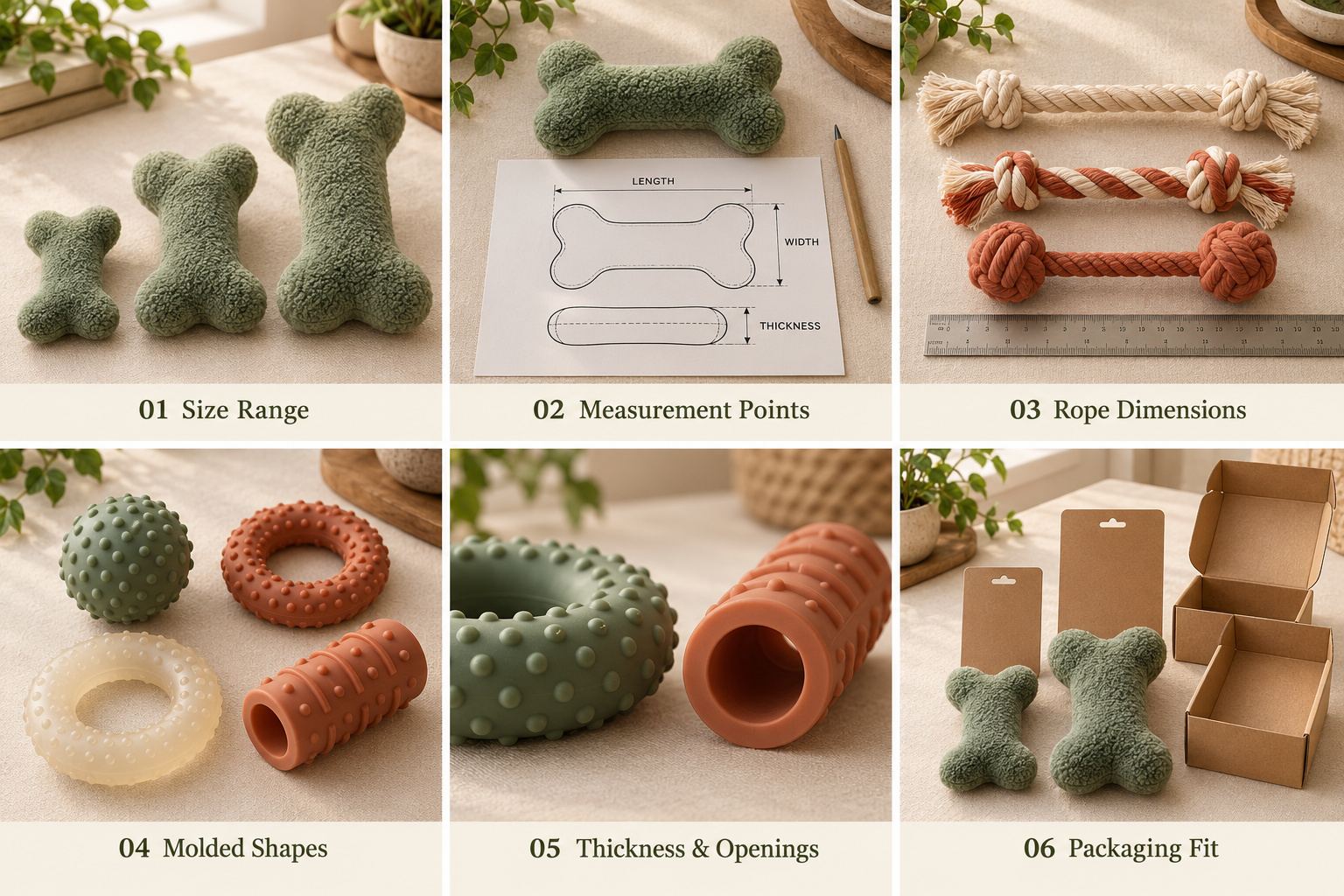
Start with the intended play function, target pet size and reference product. Overall length alone does not define a toy. Width, thickness, openings, rope sections and projecting parts may affect construction, component fit and packaging. Each proposed size needs its own review before quotation and sample approval.
 Set Clear Measurement Points
Provide dimensions in millimeters or centimeters and identify where each measurement starts and ends. For plush toys, clarify whether dimensions describe the finished filled product or the flat fabric shell. Filling and fabric pile can change the finished profile.
For rope toys, separate total length, rope diameter, loop size and knot dimensions. For molded toys, identify external dimensions, openings and relevant wall sections. Requested tolerances should be reviewed against the material and construction rather than applied equally to every product type.
Review Changes by Construction Type
Plush shape changes can require revised patterns, seam positions and filling distribution. Narrow sections or small projecting parts may be difficult to turn, fill or close consistently. A larger version may also need different internal component placement.
Rope changes affect material consumption, knot proportions and attachment positions. Rubber/TPR dimensions are linked to tooling and material behavior; resizing an existing product may require a new mold. Our rubber and TPR toy molding page explains the production considerations behind these changes.
Confirm Proportions Through Physical Samples
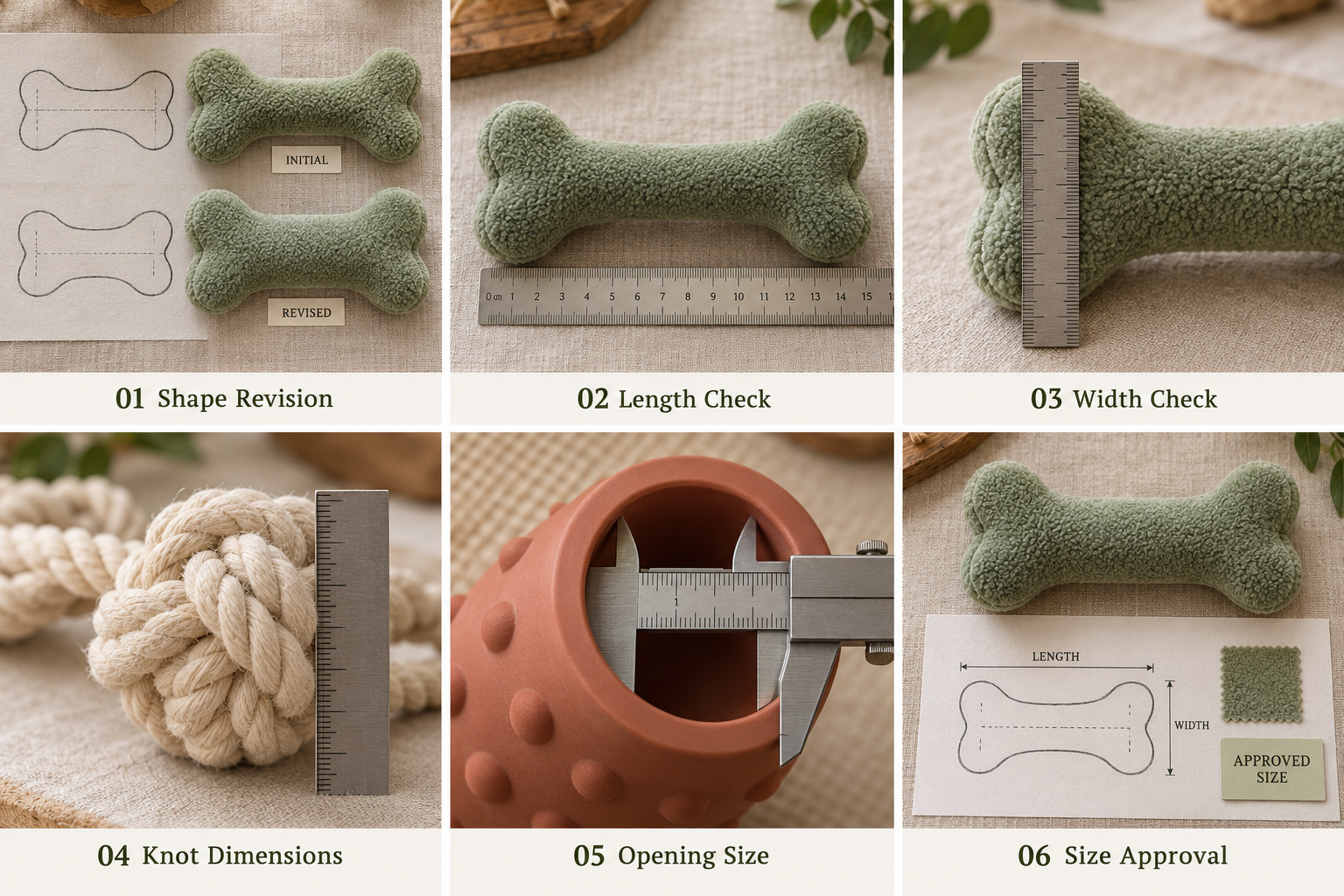
A drawing establishes the proposed outline, but a physical sample shows volume, handling and the relationship between components. When developing several sizes, buyers should review each version rather than assume one approved sample represents the entire range.
Through sample development, we coordinate the agreed dimensions and record revisions. Buyers should confirm the overall profile, measurement points, openings and component positions. Changing size does not automatically make a toy suitable for a different pet or play function; that suitability needs separate assessment.
 Check Packaging and Production Consistency
Size changes affect header cards, bags, boxes and carton quantities. A wider plush toy or longer rope section may need a different packing orientation. Packaging dimensions should follow the approved finished sample, with suitable allowance for attachments and material recovery.
Our custom pet toy packaging review helps align product dimensions with packing requirements. Production checks should use the agreed measurement method and approved reference. Differences outside agreed limits need review before packing or dispatch.
Understand Cost, MOQ and Timing
Quotations depend on dimensions, material consumption, pattern work, tooling, components and quantities per size. Separate sizes may have different minimums, particularly when new molds or specially sourced parts are involved.
Sample cost and timing are confirmed after reviewing the proposed changes. Bulk scheduling depends on final approval, materials, tooling and order quantity. Buyers should provide the destination, preferred trade term and shipment window so packing and delivery requirements can be reviewed together.
Send Your Size and Shape Requirements
Send reference images, drawings or samples, dimensions with measurement points, intended use and quantities per size and color. Include preferred materials, functional parts, packaging limits and any required inspection criteria.
Pawlenzo will review feasible adjustments, identify pattern or mold requirements and outline the sample steps needed before confirming bulk terms.